
People usually search for this


Bioregulator Peptides as a Class: The Khavinson Research Tradition

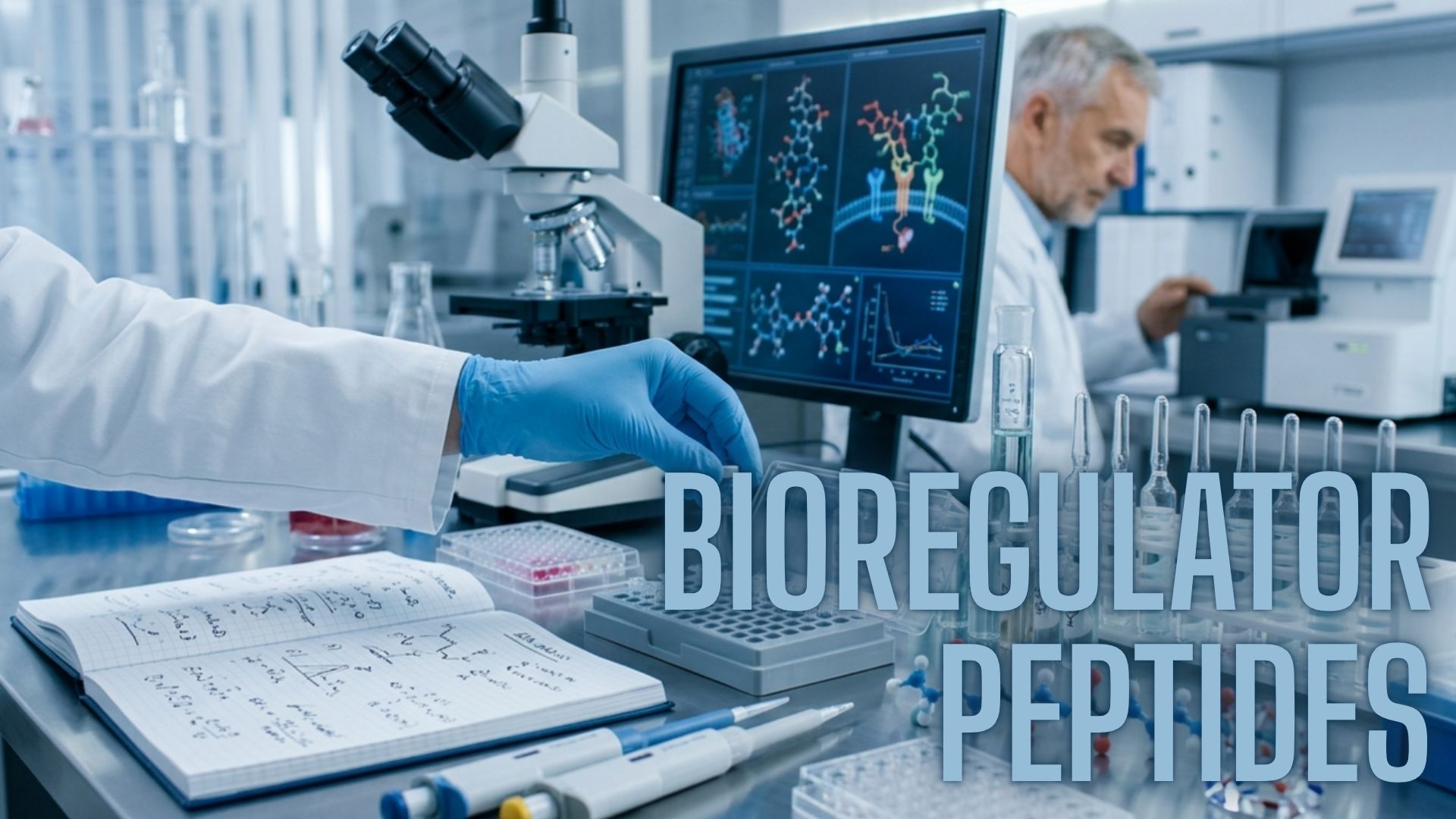
Bioregulator peptides are short-chain compounds (typically two to four amino acids) derived from or modeled on sequences found in specific organ tissues. The research hypothesis behind them is that these sequences carry tissue-specific regulatory information: that a peptide extracted from thymus tissue, for instance, carries signals relevant to immune cell function that a synthetic analog of similar length but different sequence would not. This isn’t conventional receptor pharmacology. It’s closer to a signaling language hypothesis – the idea that cells respond to sequence-specific peptide signals in ways that influence gene expression and cellular function more broadly.
Whether that hypothesis holds up across all the compounds in this category is genuinely debated. But the research tradition behind it is more substantial than its relative obscurity in Western literature might suggest.
What Are Bioregulator Peptides and How Do They Work?
What bioregulator peptides are is a question with both a simple answer and a complicated one.
The simple version: short peptides derived from animal organ tissue extracts, studied for their ability to influence gene expression and cellular function in a tissue-specific way. The compounds are small enough to cross cell membranes and interact directly with nuclear structures – chromatin binding has been documented for several of them – which distinguishes them mechanistically from peptides that act exclusively at cell surface receptors.
The more complicated answer involves the proposed mechanism of action. The leading hypothesis in this research tradition is that bioregulator peptides act as epigenetic modulators, influencing gene expression in target tissues without altering the underlying DNA sequence. Some experimental data support this: in cell culture models, certain short peptides have been shown to alter histone acetylation patterns and influence transcription factor binding in tissue-relevant ways. Whether this translates into the physiological effects observed in animal models and whether those effects translate to humans are the open questions that define the current state of the field.
Peptide bioregulators are sometimes framed as “restorative” rather than “stimulatory” – the distinction being that they’re studied for their potential to return disrupted cellular function toward baseline rather than push it beyond normal physiological parameters. This framing appears throughout the Khavinson literature and distinguishes this research tradition from conventional anabolic or receptor agonist approaches.
The Khavinson Research Framework
Vladimir Khavinson and his colleagues at the St. Petersburg Institute of Biogerontology developed the core of this research framework beginning in the 1970s, initially in a military-medical context focused on maintaining performance under stress and with aging. The practical starting point was organ-specific peptide extracts: tissue from thymus, pineal gland, brain, liver, and other organs was processed to isolate short peptide fractions, which were then studied in animal models and, eventually, human trials in the Soviet and later Russian research system.
Khavinson peptides occupy an unusual position in the research landscape. The volume of published work (spanning several decades, appearing primarily in Russian-language journals and translated summaries) is substantial. The compounds have been studied in aging populations, in clinical contexts including cancer supportive care and immune rehabilitation, and in basic science models examining gene expression and cellular aging. Some of this work has appeared in peer-reviewed Western journals, though the body of evidence has received less systematic scrutiny than equivalent evidence for more commercially prominent peptide classes.
The Khavinson peptide bioregulators group includes dozens of molecules, although a few have received disproportionate study interest. The two most often discussed are epithalon and thymalin, which each represent a distinct study focus within the larger bioregulation framework.
The systematic logic of the Khavinson framework is worth noting: rather than developing compounds empirically and then searching for mechanisms, the approach began with tissue specificity as the organizing principle. Compounds were classified by their organ of origin and the regulatory functions associated with that organ, creating a structured taxonomy of bioregulator peptides that remains the conceptual backbone of this research tradition.
Epithalon Peptide: Aging and Telomere Research
Epithalon peptide (also written Epithalamin or Epitalon) is a tetrapeptide (four amino acids, sequence Ala-Glu-Asp-Gly) derived from a pineal gland extract. It is the most studied compound in the Khavinson bioregulator class and has attracted attention primarily for its proposed relationship to telomerase activity and cellular aging.
The research context is interesting. Telomere shortening is one of the better-established molecular correlates of cellular aging: as cells divide, telomeric DNA sequences shorten progressively until the cell reaches replicative senescence or undergoes apoptosis. Telomerase is the enzyme that can restore telomere length, but its activity is suppressed in most somatic cells. Several studies within the Khavinson tradition, and some independent of it, have examined whether Epithalon influences telomerase expression.
In vitro studies using human fetal fibroblasts showed that Epithalon treatment was associated with increased telomerase activity and extended replicative lifespan of cell cultures compared to untreated controls. Animal studies showed reductions in tumor incidence and extended median lifespan in aged rodent cohorts. These are interesting findings, but the jump from cell culture and rodent data to human aging applications is one that the existing literature hasn’t yet made with the controlled trial evidence needed to support it.
Epithalon peptide benefits discussed in the research literature center on its proposed cytoprotective and longevity-relevant effects: telomerase activation in model systems, antioxidant activity, and some evidence for modulation of melatonin production – consistent with the pineal gland origin of the original extract. Epithalon peptide benefits in animal aging models are among the more reproducible findings in this class, which is part of why the compound continues to generate research interest.
Thymalin Peptide: Immune System Research

Thymalin peptide adopts a different approach. It is derived from thymus tissue and belongs to the khavinson peptide bioregulator family, which focuses on the immune system. The thymus undergoes steady involution with age, reaching its greatest size in childhood. It diminishes significantly throughout adulthood, which is connected with decreased T-cell output and age-related immunological degradation, also known as immunosenescence.
The study hypothesis for thymalin is that peptide sequences originating from the thymus contain regulatory signals related to T-cell function that may support immunological competence in aging or immunocompromised populations. Studies in the Khavinson tradition looked at thymalin in elderly people with proven immunological decline, cancer patients after chemotherapy, and fundamental science models of T-cell proliferation and differentiation.
Thymalin peptide benefits discussed in the research literature include enhanced T-cell responsiveness in aged animal models, improvements in immune function markers in human cohorts with extended follow-up, and potential interactions with natural killer cell activity. The most frequently cited human data come from long-term follow-up studies in elderly Russian cohorts that tracked mortality and immune parameters over 10-15-year periods – a methodology that is difficult to evaluate without access to the full study protocols and raw data, but that has generated sustained discussion in the longevity research community.
Thymalin peptide benefits are most consistently framed around immune regulation and restoration of immune competence rather than stimulation beyond normal parameters – consistent with the general “restorative” logic of the bioregulator framework.
Epithalon vs Thymalin: Complementary Research Directions
The comparison between the two compounds clarifies the tissue-specificity principle that underlies Khavinson peptides as a class.
- Epithalon is pineal-derived and has been studied primarily in relation to cellular aging mechanisms, including telomere biology, oxidative stress, and circadian rhythm regulation via melatonin pathways. Its research applications cluster around cellular aging.
- Thymalin is thymus-derived and studied primarily in relation to immune system function – T-cell output, NK cell activity, and the immunological aspects of aging. Its research applications cluster around immune competence and immune restoration.
Neither compound is studied as a replacement for the other, and the Khavinson framework explicitly positions them as addressing different biological systems. The broader hypothesis is that aging involves dysregulation across multiple organ systems simultaneously, and that organ-specific peptide bioregulators addressing each system individually, or in combination, represent a more physiologically coherent approach than single-target interventions.
This is a theoretically interesting hypothesis. Whether it holds up in controlled human trials with objective endpoints is the question the field hasn’t yet answered to the standards of modern evidence-based medicine.
Epithalon and Thymalin: Research Outcomes in Context
The research outcomes associated with both compounds need to be read with appropriate calibration about what the existing evidence actually demonstrates.
Epithalon peptide benefits in preclinical models are fairly consistent:
- Extended cell culture lifespan
- Telomerase activity increases in model systems
- Reduced tumor incidence in aged rodents
These findings have been replicated across several independent research groups, which adds credibility to the basic biological signal. The translation to human aging outcomes is supported by observational data from extended follow-up studies, but not by randomized controlled trials with prespecified endpoints.
Thymalin peptide benefits in human cohort data suggest:
- Immune parameter improvements
- Reduced mortality over long follow-up periods in elderly populations
The study designs involved are largely observational with historical controls – methodologically adequate for generating hypotheses, not for establishing causal efficacy.
This is where bioregulator peptides sit in the research landscape: generating genuine mechanistic interest and reasonable animal-model evidence, with human data that is suggestive but not definitive. Researchers working in this area do so with the understanding that the evidence base, while not trivial, is early-stage by the standards of contemporary pharmaceutical research.
Why This Research Field Continues to Grow
Interest in bioregulator peptides has expanded beyond the original Russian research context for several reasons. Longevity science has become a more serious academic discipline, attracting better-funded research programs willing to examine unconventional hypotheses. The telomere-aging connection has become better established in mainstream geroscience, making Epithalon’s proposed mechanism more mechanistically credible than it might have seemed decades ago. And the growing accessibility of peptide synthesis has made these compounds available for independent research in Western laboratories for the first time.
The peptide bioregulators field also benefits from a growing recognition that aging is a multi-system process – that single-target interventions are unlikely to address its complexity. The organ-specificity framework of Khavinson peptides resonates with this systems-level thinking, even if the evidence base for specific compounds needs substantially more development before clinical conclusions can be drawn.
?? This article is for informational purposes only and does not constitute medical advice or guidance on compound use.