
People usually search for this


Body Composition vs Weight Loss: How Peptide Research Separates Fat and Muscle

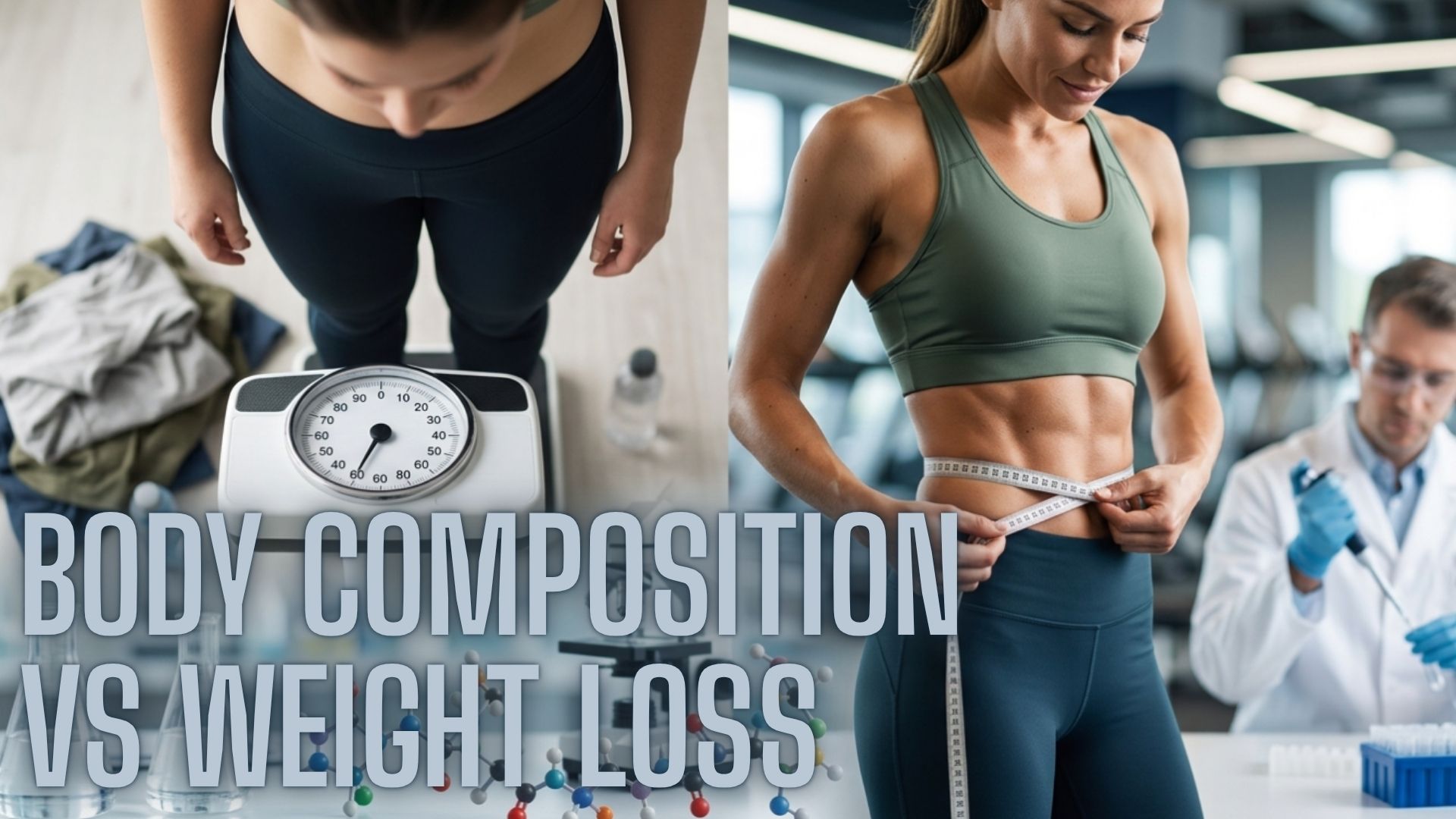
The number on the scale is, at best, a rough proxy for what’s actually happening in the body. At worst, it’s actively misleading. Body weight combines adipose tissue, skeletal muscle, bone, water across multiple fluid compartments, and gastrointestinal contents into a single figure – and when that figure changes, there’s no way to know from the scale alone what shifted and why.
This matters more than most popular health discourse acknowledges. The real question isn’t how much someone weighs, but what they’re made of and how that composition changes in response to an intervention. The difference between fat loss vs weight loss has direct, measurable consequences for metabolic function, insulin sensitivity, resting energy expenditure, and long-term cardiometabolic risk. It’s also the conceptual foundation for understanding why peptides for body composition research have developed their own methodological standards distinct from those of basic weight-loss trials.
Fat Loss vs Weight Loss: Why the Difference Matters
Here’s the core problem with scale weight as a primary endpoint: it’s a composite variable, and the components don’t have equal physiological significance.
Weight loss vs fat loss diverges most sharply under caloric restriction. When energy intake drops substantially, the body draws on multiple fuel sources, not just adipose tissue. Skeletal muscle is metabolically expensive to maintain and becomes increasingly accessible as an energy substrate when the deficit is large or prolonged. The result is weight reduction that includes a meaningful lean mass component, often substantial. By scale weight, the intervention looks successful. By body composition, the picture is considerably less favorable.
Skeletal muscle accounts for the majority of insulin-stimulated glucose disposal after a meal. Losing it reduces that disposal capacity, worsening insulin sensitivity even without an absolute increase in fat mass. Visceral adipose tissue, meanwhile, actively secretes pro-inflammatory adipokines and contributes to hepatic lipid accumulation in ways that correlate with cardiometabolic risk regardless of total body weight. Improving the fat-to-lean ratio is a meaningful physiological goal – one that scale weight cannot track.
This is why serious metabolic research has moved toward imaging-based endpoints. DEXA scans, CT-derived visceral fat area, and MRI-based adipose tissue quantification directly measure compositional change. Major trials of GLP-1 receptor agonists now routinely include these measurements alongside body weight, because the investigators recognize that weight alone doesn’t tell them what they need to know.
Water Weight vs Fat Loss: What the Scale Doesn’t Tell You
Early rapid weight loss is one of the most reliably misinterpreted phenomena in the field. The mechanism behind it has nothing to do with fat.
Carbohydrate restriction depletes glycogen stores in the liver and skeletal muscle. Glycogen binds roughly three grams of water per gram. Meaningful glycogen depletion therefore produces rapid scale weight reduction – several kilograms over a few days in some cases – with essentially no change in adipose tissue volume. Water weight vs fat loss are entirely separate events happening on completely different timescales.
The thermodynamics make this clear. A kilogram of adipose tissue represents roughly 7,700 kilocalories of stored energy. Losing one kilogram of actual fat requires a cumulative energy deficit of that magnitude. Losing several kilograms of scale weight in the first week of a dietary intervention is, by simple arithmetic, almost entirely glycogen and associated fluid, not fat. Trials that measure body weight at early timepoints and attribute the change to fat reduction are drawing an inference that the data cannot support.
Water weight vs fat loss confusion gets compounded by several other fluid mechanisms. Reduced insulin secretion with carbohydrate restriction lowers renal sodium reabsorption, producing natriuresis and further fluid loss. Cortisol fluctuations during dietary transitions affect aldosterone-mediated fluid balance. All of these change the scale number without changing the fat depot in any way.
Fat Loss vs Weight Loss: What Measurement Actually Shows
The practical consequence of all this is that fat loss vs weight loss before and after comparisons look very different depending on what’s being measured.
Two people with the same body weight can have substantially different metabolic profiles, insulin sensitivity, and resting metabolic rates – purely because of how their mass is distributed between fat and lean tissue. This is not a theoretical point. It regularly shows up in imaging data. DEXA scans in clinical trial populations consistently reveal that body-weight comparisons between subjects obscure large compositional differences with real physiological relevance.
Fat loss vs weight loss before and after data from trials like SURMOUNT – the Phase 3 program for tirzepatide in obesity – illustrates this directly. Investigators measured fat mass, lean mass, and visceral adipose area, along with body weight. They found that the nature of weight reduction varied in ways that scale weight alone would have hidden. Subjects who appeared similar by weight at endpoint differed meaningfully in visceral fat distribution and lean mass retention.
Body recomposition, reducing fat while preserving or increasing lean mass, may produce minimal scale change while generating substantial improvements in metabolic function and physical composition. This outcome is relatively common in resistance-trained populations and in subjects receiving interventions targeting fat metabolism. It’s also the outcome that the research field most consistently fails to capture when scale weight is the only endpoint.
Peptides for Body Composition: The Research Rationale
The reason peptides for body composition research have developed into a distinct area is that different physiological pathways govern fat and lean mass, and compounds that engage those pathways selectively can produce compositional shifts that generalized caloric restriction cannot.
The literature on GLP-1 receptor agonists provides the clearest clinical example. Semaglutide and tirzepatide produce substantial weight reduction in trial subjects, but the composition of that loss is a separate and important question. SURMOUNT data showed that the majority of tirzepatide-associated weight loss came from fat mass rather than lean mass – a favorable ratio compared to historical data on caloric restriction alone, but still a ratio that raises questions about what adjunctive strategies might shift it further.
Tesamorelin 20mg is a useful reference point here. It’s the only growth hormone secretagogue with FDA approval for HIV-associated lipodystrophy, and its Phase 3 trials measured visceral adipose area by CT scan rather than just body weight. The documented effect was a selective reduction in visceral fat with preservation of lean mass, a compositional pattern distinct from that produced by caloric restriction. That specificity reflects GH receptor-mediated lipolysis in visceral adipose tissue, rather than a generalized energy deficit.
Best Peptides for Body Recomposition: Research Categories
Peptides for body recomposition in the research literature are grouped into three mechanistic categories, each targeting different aspects of the fat-lean equation.
- Growth hormone secretagogues work through GHRH receptor and ghrelin receptor pathways to stimulate endogenous GH release. GH has been documented to have lipolytic effects on adipose tissue and anabolic effects on lean mass through downstream IGF-1 signaling. Sermorelin 10mg sits in this category – studied in GH-deficient populations where compositional effects are better documented than in subjects with normal GH function. The theoretical basis for recomposition is present; the human evidence in healthy populations is thinner than the mechanistic rationale might suggest.
- GLP-1 and dual incretin agonists reduce body fat primarily through appetite modulation and changes in energy balance. The effects of lean mass depend heavily on protein intake and resistance training, which is why compositional data across studies vary considerably. They’re currently the best peptides for body recomposition from an evidence-density standpoint – not because the mechanism is ideal, but because the imaging-endpoint trial data actually exists in volume.
- Metabolic pathway activators represent the third category. MOTS-C 40mg operates by activating AMPK, driving fatty acid oxidation and glucose uptake in skeletal muscle. In preclinical models, this metabolic shift has been associated with improved body composition without the lean mass catabolism that typically accompanies energy restriction. Human trial data here is limited – the mechanistic logic is solid, the clinical translation is still early.
Best peptides for body recomposition from a strictly evidence-based perspective are those with published compositional endpoint data – imaging-confirmed changes in fat and lean mass rather than just scale weight. That criterion currently points most strongly toward the approved incretin agonists and the GH secretagogue class in disease-state populations.
Body composition peptides research is also increasingly recognizing that single-compound approaches have ceiling effects. Combinations targeting multiple axes simultaneously – GH secretion and fat oxidation, or GLP-1-mediated appetite suppression and visceral fat-specific lipolysis – represent the direction the field is moving, even though controlled combination trial data remain limited.
Why This Framework Matters for Research Interpretation
The shift from weight loss to body composition peptides research reflects something real about what science has learned. Scale weight conflates mechanistically distinct phenomena, obscures lean mass changes that independently affect metabolic health, and cannot distinguish between interventions with fundamentally different tissue-level effects.
Better measurement tools have made this more tractable. DEXA, MRI, and CT-based adipose quantification are feasible at scale in clinical trials now in a way they weren’t two decades ago. As these become standard endpoints rather than supplementary ones, weight loss vs fat loss stops being a semantic distinction and becomes a measurable, interpretable research outcome.
The compounds being studied in this space vary considerably in mechanism, evidence quality, and regulatory status. What they share is a more specific hypothesis about where in the body they act and why – a more precise research question than “does body weight decrease.” That precision is what separates compositional research from older weight-management paradigms, and it’s where the most interesting findings are currently being generated.
?? This article is for informational purposes only and does not constitute medical or clinical guidance.
