
People usually search for this


GHK-Cu – The Copper Peptide Revolution for Skin and Wellness

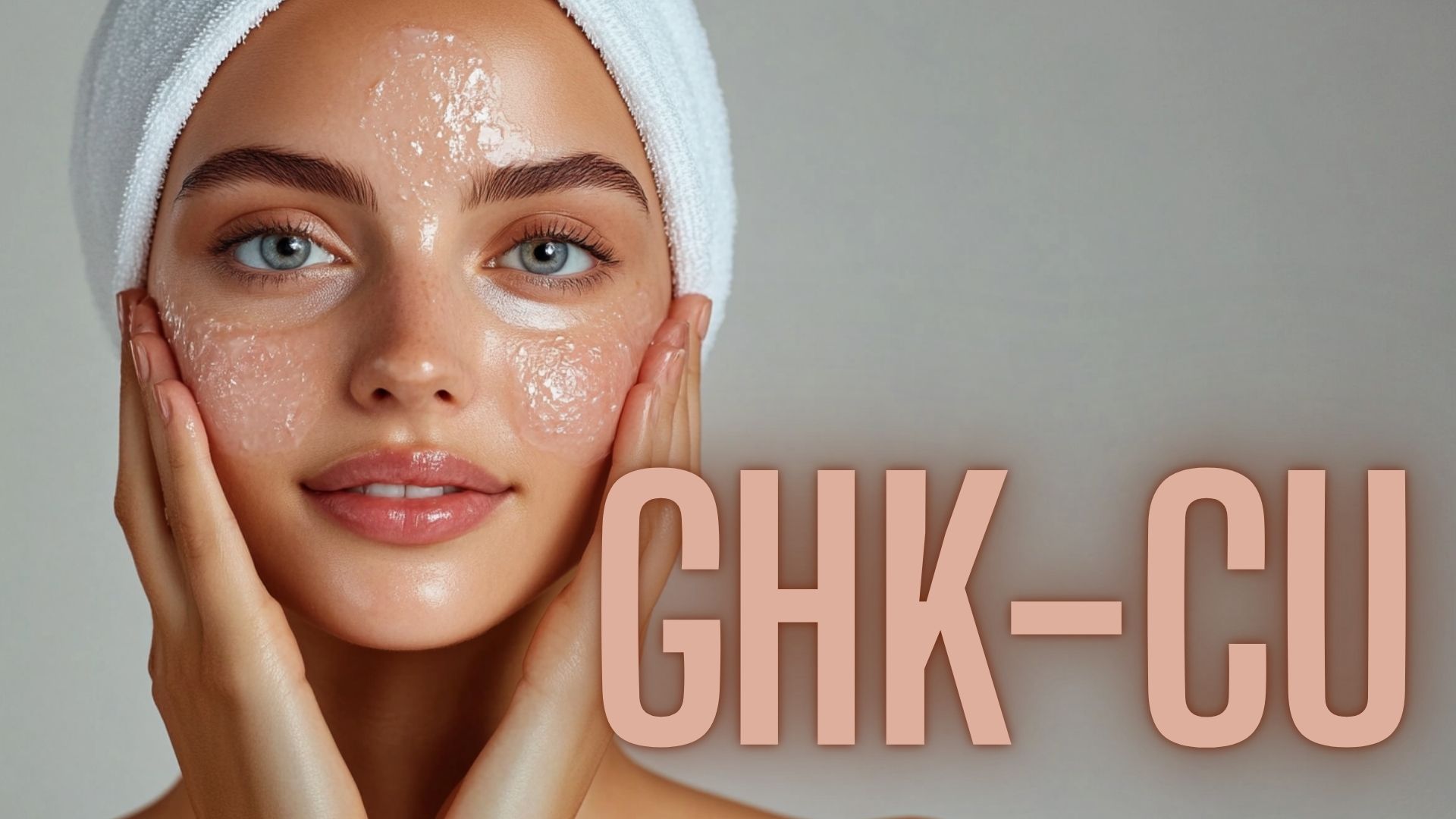
Among the hundreds of peptides studied in regenerative medicine and cosmetology, GHK-Cu occupies a special place. It is not a novelty or a trendy ingredient of the latest season – the compound was first isolated in the early 1970s by American biochemist Loren Picart from human blood plasma. Half a century of research has passed since then, and interest in it is only growing.
What is it? GHK-Cu is a tripeptide (glycyl-L-histidyl-L-lysine) bound to a copper ion. In scientific literature, it is also referred to as copper tripeptide-1. Copper is not just an “additive” here – it is critical for the functional activity of the molecule. It is the complex of the peptide with copper that provides its unique properties: collagen stimulation, antioxidant protection, and tissue remodeling support.
In recent years, GHK-Cu has gone far beyond the academic laboratory. It has become a star among anti-aging peptides in cosmetology, attracted the attention of the biohacking community, and is being actively researched as one of the leading peptides for skin regeneration. Its appeal lies in its versatility: from face serums to injection protocols, from anti-aging programs to tissue healing support. Even dermatologists, traditionally skeptical of “miracle ingredients,” acknowledge that GHK-Cu has one of the most compelling evidence bases among peptide cosmetic actives.
Let’s take a look at what’s behind this compound’s reputation and how it can fit into your skincare and overall wellness strategy.
How GHK-Cu Peptide Works for Skin and Overall Wellness
The mechanism of action of GHK-Cu copper peptide is multi-level, which is what sets it apart from most cosmetic ingredients. At the molecular level, GHK-Cu interacts with a multitude of signaling pathways – according to genomic studies by Loren Picart and his colleagues, it modulates the expression of more than 4,000 genes. This sounds incredible for a tripeptide weighing less than 500 daltons, but it is precisely what makes it the subject of intense scientific interest. No other cosmetic ingredient demonstrates this scale of gene regulation. Key mechanisms:
- Stimulation of collagen I and III synthesis
- Activation of fibronectin and glycosaminoglycan (including hyaluronic acid) production
- Enhancement of superoxide dismutase (SOD) activity, one of the body’s main antioxidant enzymes
At the same time, GHK-Cu suppresses excessive inflammation by modulating the NF-?B pathway and reduces the production of pro-inflammatory cytokines.
In essence, the GHK-Cu peptide acts as a “conductor” of repair processes: it does not simply add a single component but reconfigures the entire tissue remodeling program. This is why it is considered one of the most promising anti-aging peptides – it acts not on the symptom (wrinkles), but on the underlying process (extracellular matrix degradation).
Key Benefits of GHK-Cu and Copper Peptides
Copper peptide benefits have been documented in hundreds of studies, from in vitro experiments to clinical observations. Here is what science has found:
- Stimulation of collagen and elastin. GHK-Cu increases the synthesis of type I collagen by 70% and type III collagen by almost half, according to several in vitro studies. At the same time, it stimulates decorin production, a proteoglycan that organizes collagen fibers into the correct structure. This directly affects the skin’s density, firmness, and elasticity. With age, collagen production declines by about 1% per year starting at 25-30 years old; by 50, the loss is already 20-25%. GHK-Cu can partially compensate for this loss, which is why it is one of the key assets in anti-aging cosmetology.
- Antioxidant protection. Activation of SOD and suppression of lipid peroxidation help neutralize free radicals, the main factor in photoaging and oxidative damage to the skin. This is not “sun protection” (there is SPF for that), but an additional level of antioxidant defense.
- Accelerated healing and remodeling. GHK-Cu stimulates angiogenesis (the growth of new blood vessels) and attracts immune cells to the damaged area, thereby accelerating recovery. Among skin repair peptides, it stands out for simultaneously stimulating regeneration and inhibiting scar tissue formation.
- Hair growth support. Several studies indicate that GHK-Cu can increase hair follicle size and prolong the anagen (active growth) phase. For the trichology industry, this is one of the most interesting areas of application for copper peptides.
GHK-Cu Applications – From Skincare to Anti-Aging Solutions
The practical application of GHK-Cu peptide covers several formats, each with its own characteristics.
In cosmetology, GHK-Cu is most often found in serums and creams in concentrations ranging from 0.01% to 1%. Topical application provides a local effect on the skin – stimulating collagen, evening out texture, and reducing fine wrinkles. The advantage of this format is its ease of integration into daily care. Apply the serum after cleansing and before moisturizing cream, and the copper peptide will work throughout the day.
Injectable forms of GHK copper peptide are of interest to those seeking a systemic effect – supporting tissue remodeling not only in the skin, but also in the joints, ligaments, and internal organs. In a research context, subcutaneous injections bypass the stratum corneum barrier and deliver the active substance directly into the dermis and deeper tissues. Bioavailability from injection is incomparably higher than from topical application, which is important for those seeking a systemic rather than a local effect.
GHK-Cu also combines well with other active ingredients:
- Retinol (with caution regarding timing)
- Vitamin C
- Niacinamide
- Hyaluronic acid
Among peptides for skin regeneration, it stands out for its compatibility – unlike some acids or retinoids, GHK-Cu rarely conflicts with other skincare ingredients.
Who Can Benefit from GHK-Cu Copper Peptide

GHK-Cu copper peptide is one of those compounds with an unusually broad target audience:
- Older users (35+) will find it helpful in combating collagen loss and reduced elasticity – processes that begin to accelerate after 30 and become noticeable by 40.
- People with post-acne or scars – a potential tool for remodeling damaged skin, as GHK-Cu stimulates matrix renewal without aggressive effects.
- Athletes and fitness enthusiasts – support for the restoration of connective tissues after exercise, which is especially important for joints, ligaments, and tendons.
A separate category is people who have undergone aggressive cosmetic procedures: chemical peels, laser resurfacing, and microneedling. GHK-Cu can accelerate skin recovery in the post-procedure period by reducing inflammation and stimulating the regeneration of damaged areas. Several clinics already include copper peptides in their rehabilitation protocols, and the results, according to reviews from practicing dermatologists, are encouraging. At the same time, copper peptide is well-tolerated and rarely causes allergic reactions or irritation. This makes it suitable for virtually any skin type – from sensitive and reactive to oily and prone to inflammation.
How to Incorporate GHK-Cu into Your Skincare Routine
Integrating GHK Cu peptide into your daily skincare routine is not difficult, but there are some nuances that will affect the results.
For topical application, the optimal strategy is to apply a GHK-Cu serum to clean, slightly damp skin. Moisture improves the penetration of the peptide through the stratum corneum – the upper protective barrier that, when dry, acts as a shield against any active ingredients. Then follow your usual skincare routine: moisturizer, SPF in the morning. Evening option: cleansing, GHK-Cu serum, night cream. If you use retinol, spread it out on different evenings or apply retinol on top, allowing the peptide serum to absorb for 10-15 minutes. Some formulas combine GHK-Cu with niacinamide in a single serum, a successful combination that strengthens the skin’s barrier function.
The key principle is consistency. The collagen response to GHK-Cu is not an instant process. Real changes in skin texture and density usually become noticeable after 8-12 weeks of regular use. This is biology, not marketing: the synthesis of new collagen, its organization in the extracellular matrix, the maturation of fibers, and visible results are a chain that requires time and patience. Compare photos taken a month apart, rather than looking for differences every morning.
For injectable forms, product quality becomes crucial. Working with the GHK-Cu peptide of unconfirmed purity in an injectable format is an unjustified risk. A certificate of analysis (CoA), purity ?99%, and proper storage are mandatory requirements.
Tips for Maximizing the Effects of Copper Peptides
Even the best peptide cannot compensate for bad habits. GHK-Cu is a powerful tool, but it works in context: overall skin condition, lifestyle, and accompanying care determine how fully its potential will be realized. Here are some recommendations:
- Protection from UV radiation. Sun damage is the main factor in collagen degradation. Using GHK-Cu to stimulate synthesis while ignoring SPF is like pouring water into a leaky bucket. Daily SPF 30+ sunscreen is a must-have companion to any anti-aging protocol.
- Hydration. Dehydrated skin absorbs active ingredients less effectively and regenerates more slowly. Hyaluronic acid, ceramides, and glycerin are basic moisturizing ingredients that create an optimal environment for the peptide to work.
- Consistency is more important than intensity. Daily use at moderate concentrations yields better results than occasional. Skin is a slow-acting tissue, and a steady signal is more effective than a one-time “hit.”
Where to Buy GHK-Cu and Copper Peptides Safely
The market for copper peptides is huge, ranging from mass-market cosmetics to pharmaceutical-grade research compounds. And the difference between them is fundamental. A cream from a pharmacy may contain trace amounts of GHK-Cu, insufficient for any significant biological effect – a nice name on the label, but not a therapeutic concentration.
Grey Research Peptides offers GHK-Cu 50mg in injectable form – a compound synthesized using advanced methods and subjected to multi-stage analytical control. For those who work seriously with copper peptides or anti-aging protocols, the quality of the source determines the reproducibility of the result. Working with a peptide of unknown origin devalues any protocol – you don’t know the actual concentration, the impurity profile, or the conditions under which the product was stored before purchase. We provide complete transparency: CoA for each batch, detailed product description, correct storage and delivery conditions.Explore GHK Cu peptide in our catalog – and make sure your choice is based on quality, not promises. Your skin is an organ you wear every day, and it deserves the best tools.
Frequently Asked Questions
What exactly is GHK-Cu?
GHK-Cu is a naturally occurring tripeptide composed of glycine-histidine-lysine bound to a copper ion. It was originally identified in human plasma in 1973 and has since been characterized in research as a small signaling peptide with copper-carrying activity. Plasma concentrations decline with age, dropping by roughly half between age 20 and age 60 in human cohorts.
Why has GHK-Cu remained a research focus for over 50 years?
Genomic studies have shown GHK-Cu modulates expression of more than 4,000 human genes — making it one of the most broad-acting peptides ever characterized. Effects span DNA repair, antioxidant pathways, anti-inflammatory signaling, and extracellular matrix remodeling. This unusually wide signaling footprint keeps GHK-Cu relevant across multiple research domains rather than confined to a single tissue.
How does the copper binding contribute to GHK-Cu's biological activity?
The copper ion is integral to GHK-Cu's activity, not a passive passenger. Copper acts as a cofactor for several enzymes involved in connective tissue synthesis (lysyl oxidase) and antioxidant defense (superoxide dismutase). GHK delivers copper in a bioavailable form across cell membranes — a transport function that the peptide alone, without copper, does not perform with the same efficiency.
What research delivery methods are commonly used?
GHK-Cu is studied in three main formats: topical formulations for skin penetration research (creams, serums, hydrogels), subcutaneous injection for systemic exposure studies, and direct application to ex vivo tissue cultures. Each format addresses different research questions — topical for skin barrier penetration kinetics, subcutaneous for tissue distribution, and ex vivo for direct mechanism studies.