
People usually search for this


PT-141 – A Potent Peptide for Sexual Health, Desire, and Confidence

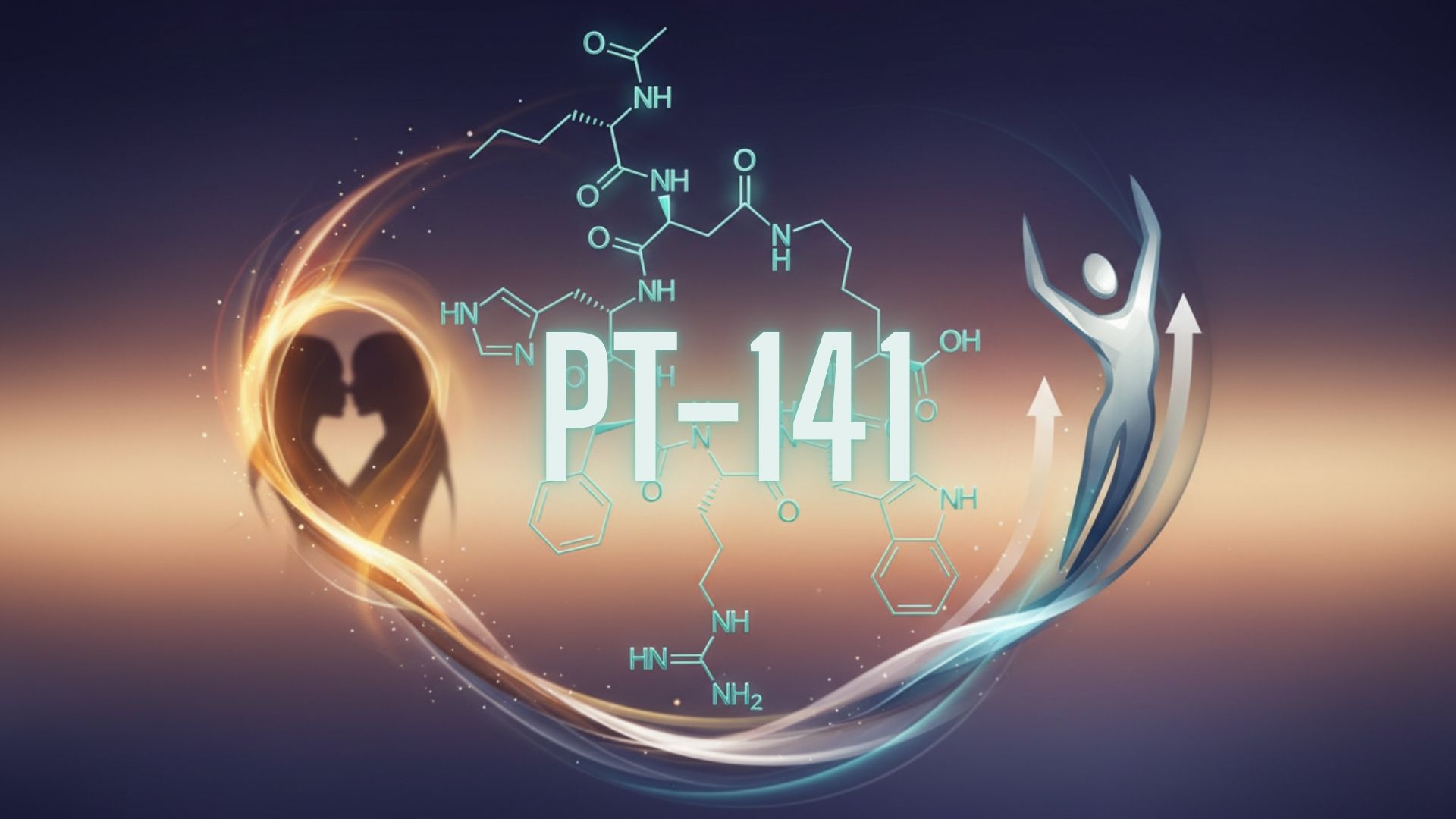
Over the past few years, peptide therapy has ceased to be something exotic and has firmly entered the field of vision of both researchers and people who are looking for non-standard solutions in the field of sexual health. PT-141 peptide is one of those compounds that has attracted sustained and well-founded interest. The reason is simple: unlike classic pharmacological agents, this peptide does not act directly on blood vessels or hormones, but rather on the brain. More precisely, the peptide works with the neural pathways responsible for the formation of sexual desire.
In short, what PT-141 is used for is to support libido through central regulatory mechanisms. It sounds abstract, but in practice it means a fundamentally different approach: not “forcing the body to respond,” but “restoring the brain’s ability to desire.” That is why PT-141 is increasingly referred to as a new generation peptide for sex drive.
What is particularly interesting is that, among peptides for sexual health, PT-141 is not gender-specific. It attracts both men and women, which is rather an exception for this class of compounds. Most traditional remedies were developed with male erectile dysfunction in mind, whereas the problem of decreased desire is universal and affects millions of people regardless of gender.
Next, we will examine how PT-141 peptide works, what to expect from it, the nuances of safety, and why it stands out from other peptides in this class.
What Is PT-141 and How Does This Peptide Work
Let’s start with the basics. PT 141 peptide, also known as bremelanotide, is a synthetic compound. In terms of its structure, it is a cyclic heptapeptide obtained by modifying Melanotan-II. The developers sought to “cut out” from MT-II the part of its activity that is responsible for sexual arousal, while removing the side effects associated with skin pigmentation. The result was not perfect, but good enough for the compound to reach Phase III clinical trials.
The mechanism of action of peptide PT-141 is associated with the activation of melanocortin receptors MC3R and MC4R in the hypothalamus. These receptors are part of a complex neuroendocrine network that regulates not only sexual behavior, but also appetite, energy balance, and stress response. When PT-141 binds to MC4R, it triggers a cascade of dopaminergic signals – the very ones the brain uses to encode “I want it” and “I like it.”
How is this different from familiar medications like sildenafil? Fundamentally. PDE-5 inhibitors dilate the blood vessels in the genitals – they provide blood flow, but do not affect whether a person has desire. PT 141 peptide works higher up the chain: it modulates the motivation for sexual contact. For people whose “mechanics” work normally but whose desire has faded, this is a completely different mechanism.
Among peptides for sex, this makes PT-141 unique: it occupies a niche that virtually no one else has occupied before – the niche of neuromodulation of sexual desire.
PT-141 Benefits for Sexual Health and Desire
Now to the main question: what specific PT-141 benefits have been documented in studies and user reports? Honesty is important here – PT-141 does not work miracles or transform a person into a different version of themselves. But certain effects are reproduced consistently enough to deserve attention:
- Increased sexual desire. This is the key and most documented effect. In clinical trials on women with hypoactive sexual desire disorder (HSDD), bremelanotide showed a statistically significant increase in the number of “significant sexual events” compared to placebo. A similar trend was observed in men: an increase in subjective desire unrelated to erectile function.
- Increased sensitivity to stimuli. Users often describe this as “heightened perception” – touch, visual images, even smells begin to be perceived more intensely in a sexual context. From a neurochemical perspective, this is understandable: dopaminergic activation increases overall sensory reactivity.
- Emotional involvement. Unlike drugs that provide “mechanical” readiness, PT-141 affects the quality of the experience. People note that sex becomes not just a physical act, but an emotionally rich experience. This effect is especially valuable for couples where one or both partners have experienced a decline in interest.
- Boosting confidence. A side effect – but an extremely significant one – of restoring libido is an increase in self-esteem in the intimate sphere. When desire returns, a person stops perceiving themselves as “broken,” and this affects the relationship as a whole.
- Applicable to both sexes. PT-141 is one of the few peptides for sexual health that is effective in both men and women. For women with HSDD, it is actually the first FDA-approved injectable treatment.
PT-141 for Men – Performance, Desire, and Control
The conversation about PT-141 for men should start with an uncomfortable truth: male sexual health has long been reduced to one question – “erection or no erection”. Erection pills solved this problem, but the issue of desire remained behind the scenes. However, a decrease in libido in men after the age of 35-40 is no less common than erectile dysfunction. It’s just that it is talked about less often.
PT 141 for men is interesting precisely because it is a solution for cases when physiology is fine but the “spark” has gone out. Activation of MC4R receptors triggers dopamine signaling, which is responsible for motivation and anticipation. In essence, PT-141 reminds the brain what it feels like to “want” – and for men who are used to desire arising automatically, this can be a serious shift.
Important note: PT-141 for men is not a substitute for a comprehensive diagnosis. If the decrease in libido is caused by testosterone deficiency, thyroid dysfunction, depression, or chronic fatigue, the peptide alone will not solve the root problem. It can be part of a strategy, but not the only element. At the same time, it is worth paying attention to lifestyle: sleep quality, stress levels, physical activity – all of these directly affect how the brain “processes” signals related to a peptide for sex stimulation.
PT-141 Side Effects – What Users Should Know

Any biologically active substance has its own safety profile, and it would be dishonest to gloss over the PT-141 side effects. The good news is that most side effects are predictable and manageable. Here is what is most often recorded in clinical data and user reports:
- Nausea. It is the most common side effect, especially during the first few uses. It occurred in approximately 40% of participants in the clinical trial. As a rule, the severity decreases with dose adjustment and as the body “gets used to it.”
- Headache. It is the second most common effect. Usually of moderate intensity and resolves on its own within a few hours. Presumably associated with changes in vascular tone against the background of activation of central receptors.
- Facial flushing. A feeling of heat and visible redness, more often in the cheeks and neck. This effect is transient, not dangerous, but may cause discomfort.
- Short-term increase in blood pressure. This has been reported in several studies, but clinically significant increases are rare. Nevertheless, people with uncontrolled hypertension should exercise caution.
- Reactions at the injection site. Redness, mild pain, or itching are common after subcutaneous injections and usually resolve in 15-30 minutes.
Knowing about these reactions isn’t a reason to worry, but a tool for making informed choices. When you know what to expect, you can plan your use more wisely and feel more confident.
How PT-141 Compares to Other Sex Peptides
PT-141 is far from the only compound on the sex peptides market, but it is definitely one of the most studied. To understand its place, it is useful to compare it with its closest “competitors.”
Melanotan-II is the “progenitor” of PT-141. MT-II activates several subtypes of melanocortin receptors simultaneously, giving it a wide range of effects: skin darkening, decreased appetite, and, yes, increased libido. The problem is that this lack of selectivity leads to more side effects. Nausea with MT-II is more pronounced, and skin pigmentation is an undesirable “bonus” for many. PT-141 was created specifically to preserve the sexual activity of MT-II while removing the rest.
Kisspeptin is another candidate for peptides for sex support, but with a fundamentally different mechanism. It works through the GnRH (gonadotropin-releasing hormone) axis, stimulating the release of luteinizing hormone and, indirectly, testosterone. It is more of an endocrine tool than a neuromodulator. Kisspeptin can enhance attraction, but it does so “the long way,” through hormonal cascades. PT-141 acts faster and more precisely – directly on the centers of desire.
Among sex peptides, PT-141 stands out for its work at the intersection of neurobiology and subjective experience. It doesn’t just raise hormone levels or dilate blood vessels. It changes how the brain experiences attraction. It is suitable for those looking for peptides for sex with an emphasis on the quality of the experience, not just the physical result, which is a fundamental difference.
Who Can Benefit from PT-141 Peptide

Who can really benefit from the PT-141 peptide? There is no universal answer, but it is possible to identify profiles for which this compound is of greatest interest.
First, it is men and women whose decreased libido cannot be explained by obvious medical reasons, when the tests are normal, but the desire has still faded. Such situations are more common than is commonly thought, and classical medicine does not yet offer clear solutions for them.
Second, people who have experienced a decrease in desire due to chronic stress, burnout, or taking certain medications (SSRI antidepressants are notorious for this effect). In such cases, the PT 141 peptide can be considered a supplement to the main strategy rather than monotherapy.
Thirdly, those who have already tried traditional approaches (sildenafil, tadalafil, hormone therapy) and have not achieved the desired result in terms of desire. The mechanisms of action of PT-141-type peptides for sexual health are fundamentally different, and a lack of response to one agent does not imply a lack of response to another.
Buying PT-141 Peptide Safely and Confidently
The last but critically important aspect is where and how to purchase PT 141 peptide. The research peptide market is heterogeneous: alongside reputable manufacturers, there are companies selling products of dubious purity, without analytical certificates, and with violations of storage conditions. Working with such raw materials not only reduces reproducibility but also increases the risk of adverse reactions.
What to look for when choosing a supplier: the availability of Certificates of Analysis for each batch, confirmed purity of at least 99%, transparent information about synthesis and quality control methods, and proper storage and delivery conditions.
Grey Research Peptides operates in accordance with these standards. Every peptide for sex research presented in our catalog undergoes strict multi-stage control. We use both automated and manual methods of peptide synthesis, including solid-phase and liquid-phase technologies, which allow us to achieve and consistently maintain a purity level of ?99%.Ultimately, choosing a supplier of PT 141 for men’s and women’s health is part of the research discipline. A reliable source means reproducible results, a predictable safety profile, and the confidence that you are working with the compound listed on the label. Check out our range of PT-141 and choose quality.
Frequently Asked Questions
What is PT-141 and how does it work in research models?
PT-141 (bremelanotide) is a synthetic cyclic heptapeptide that acts as a melanocortin receptor agonist, primarily at the MC4 receptor in central nervous system pathways. Unlike compounds that act peripherally on the vascular system, PT-141 has been characterized in preclinical and clinical research as targeting central nervous system circuits involved in sexual arousal and desire.
How does PT-141 differ from peripheral vasodilator approaches?
PDE5 inhibitors and similar vasodilator-class compounds work peripherally by affecting blood flow. PT-141's mechanism is centrally mediated through melanocortin receptor signaling in brain regions linked to sexual response. This distinct mechanism makes it a separate research category and explains why preclinical comparison studies use different experimental endpoints.
What does the research literature show about melanocortin receptor activation?
Melanocortin receptors (MC1R through MC5R) are distributed across multiple tissues. MC4R, the primary target of PT-141 in CNS research, has been studied for roles in appetite regulation, energy homeostasis, and sexual response. Selective MC4R agonism produces effects observed in both rodent and primate models without significant peripheral cardiovascular activation.
How was PT-141 evaluated in clinical research?
PT-141 (bremelanotide) was studied in multi-phase clinical trials for hypoactive sexual desire disorder in premenopausal women, leading to FDA approval in 2019. Trials documented subcutaneous administration as the delivery route, characterized pharmacokinetics, and evaluated both efficacy endpoints and side effect profiles including nausea and transient blood pressure changes observed in some study participants.