
People usually search for this


Glutathione Benefits & Side Effects – Full Supplement Guide 2026

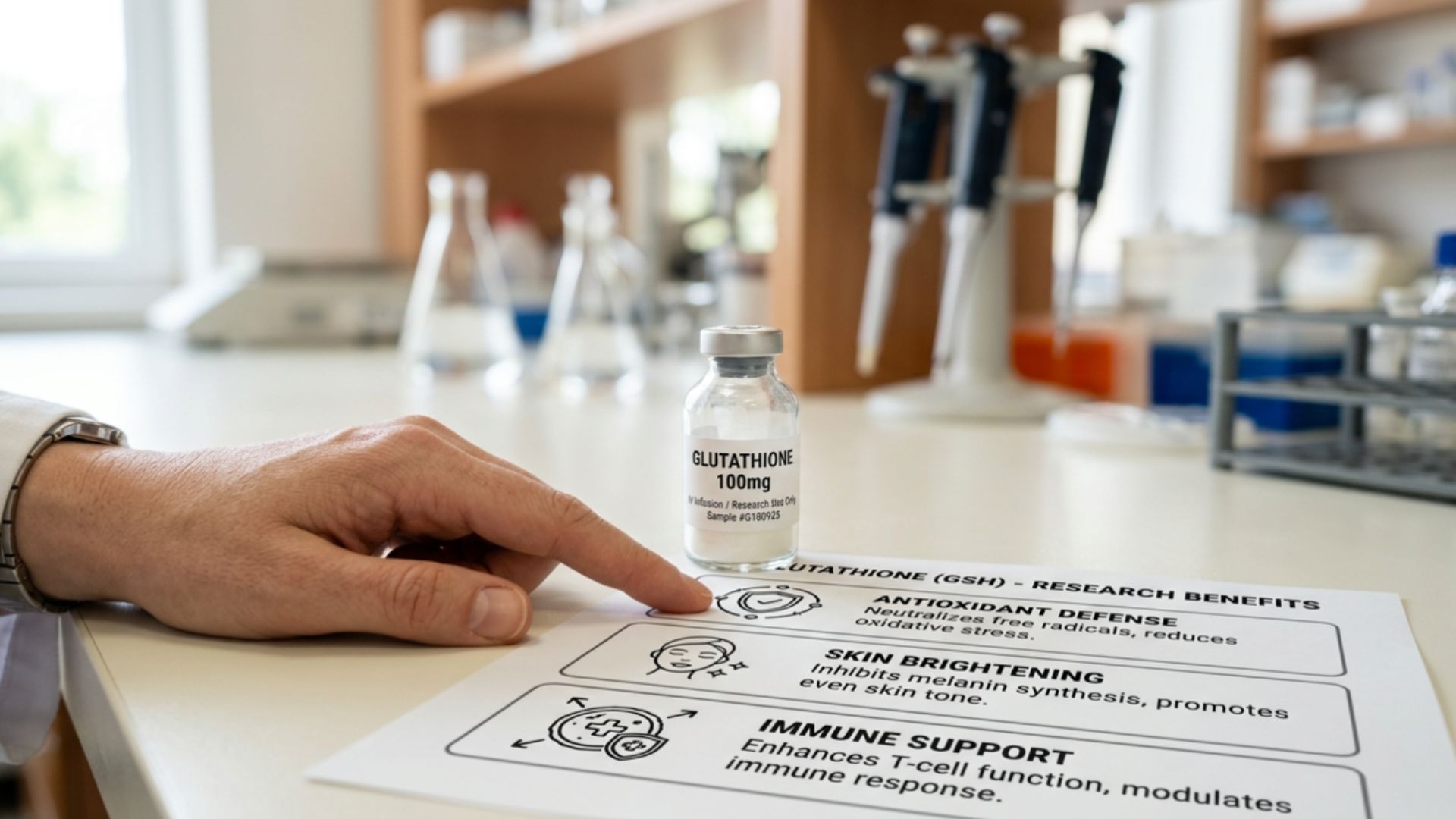
Medical Disclaimer: This article is for informational and educational purposes only. It is not a substitute for professional medical advice, diagnosis, or treatment. Always consult a qualified healthcare provider before starting any supplement regimen, especially if you have existing health conditions or take prescription medications.
Written by: Dr. Alexander Isaacs, PhD — Biochemistry and Peptide Research Consultant
Medically reviewed by: The Grey Research Peptides editorial team
Glutathione Benefits, Side Effects, and Supplement Forms: Independent Research Guide
While often marketed as a “sidekick” to NAD+, glutathione—technically gamma-glutamylcysteinylglycine—is a standalone tripeptide that handles critical biochemical operations independently. These include phase II liver detoxification, direct reactive oxygen species (ROS) scavenging, melanin regulation, and mitochondrial redox buffering. This guide examines the evidence for glutathione based on biochemistry and clinical data rather than marketing narratives.
What Is Glutathione? (The “Master Antioxidant”)
Glutathione is the most abundant intracellular antioxidant in human cells, found in nearly every tissue, with the highest concentrations in the liver. Unlike Vitamin C or E, your body synthesizes glutathione internally from three amino acids: glutamate, cysteine, and glycine.
Molecular Structure
The molecule features an unusual gamma peptide bond that protects it from standard breakdown. Its “engine” is the cysteine sulfhydryl group (-SH), which donates electrons to neutralize toxins.
- GSH: The reduced (active) form.
- GSSG: The oxidized (spent) form.
- The Ratio: Healthy cells maintain a GSH:GSSG ratio of approximately 100:1. A drop in this ratio is a primary indicator of oxidative stress.
Production and Recycling
The “bottleneck” in glutathione production is usually the availability of cysteine. This is why N-acetylcysteine (NAC) is frequently used to boost glutathione levels. While the recycling process (converting GSSG back to GSH) uses NADPH (related to NAD+), the actual detoxification and antioxidant actions are glutathione-specific.
Evidence-Based Benefits
| Benefit Category | Specific Mechanism | Evidence Strength |
| Antioxidant Defense | Direct ROS neutralization; regenerates Vitamin C & E | Strong |
| Liver Detoxification | Phase II xenobiotic conjugation (GST enzyme) | Strong |
| Mitochondrial Protection | Buffers the electron transport chain | Strong |
| Skin Lightening | Tyrosinase inhibition; shift to lighter pheomelanin | Moderate |
| Neuroprotection | Restoration of GSH in the substantia nigra | Emerging |
| Immune Support | T-cell and Natural Killer (NK) cell activation | Moderate |
Clinical Highlight: Liver Detox
The liver uses glutathione to make drugs, pollutants, and heavy metals water-soluble for excretion. For example, acetaminophen (Tylenol) overdose is treated with IV NAC specifically because it restores the glutathione needed to neutralize toxic metabolites.
Clinical Highlight: Skin Health
Glutathione inhibits the enzyme tyrosinase, which creates melanin. Clinical trials show a measurable lightening effect with consistent use, though results are often modest and require ongoing maintenance.
Supplement Forms and Bioavailability
The biggest hurdle for glutathione is digestion. As a tripeptide, it is easily broken down by stomach acid.
- Standard Oral GSH: Low bioavailability; largely degraded in the gut.
- Liposomal Glutathione: Encapsulates GSH in fat-like vesicles (liposomes). This protects the molecule and allows it to merge directly with cell membranes. Research shows this form significantly increases blood levels and immune markers.
- Glutathione Injections (IV/IM): The highest bioavailability. Bypasses the gut entirely. Typically used in clinical settings for acute toxicity or neurological research.
- NAC (Precursor): An effective, low-cost way to provide the “raw materials” for your body to manufacture its own glutathione.
Side Effects and Safety
Glutathione is generally well-tolerated, but there are risks to consider:
- GI Issues: Bloating or cramping (common with oral/liposomal forms).
- Zinc Depletion: Long-term, high-dose IV use may lead to mineral imbalances.
- Chemotherapy Interaction: Because glutathione is so effective at detoxifying, it may theoretically reduce the efficacy of certain chemotherapy drugs. Oncology patients must consult their doctors.
- Asthma Warning: Inhaled glutathione can trigger bronchospasms in sensitive individuals.
- Injection Risks: IV/IM injections should only be performed by licensed professionals to avoid infection, air embolisms, or incorrect dosing.
Independence from NAD+
Many products bundle Glutathione with NAD+. While they work together in a broad cellular sense, Glutathione’s primary jobs do not require NAD+.
- Detox: Phase II conjugation via GST is NAD+-independent.
- Skin Lightening: Tyrosinase inhibition is a direct GSH interaction.
- Parkinson’s Research: The depletion of GSH in the brain occurs independently of NAD+ levels, making GSH repletion a specific target for neurodegenerative research.
Lifestyle Support
You can support your levels naturally by consuming:
- Sulfur-rich foods: Broccoli, garlic, onions, and eggs.
- Whey Protein: Rich in cysteine.
- Selenium: One or two Brazil nuts a day provides the selenium required for glutathione enzymes to function.
Frequently Asked Questions
- Can it lighten skin? Yes, by inhibiting tyrosinase, but the effect is gradual (4-12 weeks) and reversible if stopped.
- Does it help with hangovers? While it helps process acetaldehyde (a toxic byproduct of alcohol), the “IV hangover cure” trend is largely due to the hydration of the IV itself. NAC taken before drinking has more scientific support.
- Is it safe for long-term use? Most studies last 1–6 months. It is considered safe for healthy adults, but many practitioners suggest “cycling” the supplement (e.g., 8 weeks on, 2 weeks off).
Selected References
- Sian J, et al. (1994). GSH in Parkinson’s disease. Annals of Neurology.
- Richie JP Jr, et al. (2015). Oral GSH supplementation. European Journal of Nutrition.
- Sinha R, et al. (2018). Liposomal GSH and immune function. European Journal of Clinical Nutrition.
- Weschawalit S, et al. (2017). Anti-aging and melanin effects. Clinical, Cosmetic and Investigational Dermatology.