




Product Usage:
This PRODUCT IS INTENDED AS A RESEARCH CHEMICAL ONLY.
This designation allows the use of research chemicals strictly for in vitro testing and
laboratory experimentation only. All product information available on this website is for
educational purposes only. Bodily introduction of any kind into humans or animals is
strictly forbidden by law. This product should only be handled by licensed, qualified
professionals. This product is not a drug, food, or cosmetic and may not be misbranded,
misused or mislabeled as a drug, food or cosmetic.


Tesofensine 500mcg x 100ct
$250.00
Summary Description: Tesofensine is a synthetic, orally active, triple monoamine reuptake inhibitor developed primarily as an anti-obesity agent. It inhibits the reuptake of dopamine (DA), norepinephrine (NE), and serotonin (5-HT), leading to prolonged monoaminergic neurotransmission. Tesofensine lowers body weight mainly by reducing appetite, increasing satiety, and enhancing energy expenditure, making it a promising candidate for the pharmacological treatment of obesity1-4.
21 in stock
Description
Compound Name: Tesofensine
Synonyms: NS-2330, 3-[bis(benzyl)methylamino]-2-(ethoxymethyl)-1-(3,4-dichlorophenyl)-tropane
CAS Number: 195875-84-4
Molecular Formula: C17H23Cl2NO
Molecular Weight: ~328.3 g/mol
Structure: Synthetic triple monoamine reuptake inhibitor
Peptide Sequence: N/A; Not a peptide
Chemical Structure:
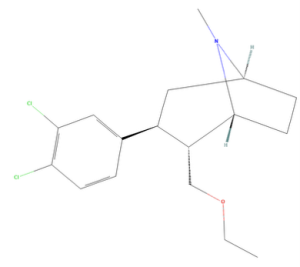
Source: PubChem
Mechanism of Action: Tesofensine acts by competitively inhibiting the reuptake of dopamine, norepinephrine, and serotonin in the central nervous system. By blocking their respective transporters, tesofensine prolongs monoamine signaling in key brain regions involved in appetite and energy homeostasis, including the lateral hypothalamus. This results in suppressed food intake, increased satiety, and enhanced energy metabolism. Tesofensine’s unique triple reuptake inhibition differentiates it mechanistically from other anti-obesity agents targeting only one or two neurotransmitter systems1-4.
Biological Activity: Tesofensine exhibits potent appetite suppressant and weight-reducing effects in animal models and clinical studies. In rodents and humans, tesofensine significantly decreases caloric intake, promotes loss of body fat (especially visceral fat), and improves metabolic profiles (reducing cholesterol, triglycerides, and insulin). It has shown greater efficacy for weight loss than sibutramine and rimonabant in preclinical head-to-head studies. Tesofensine also modulates hypothalamic neuronal activity, specifically silencing GABAergic neurons that stimulate feeding, and augments fat oxidation and night-time energy expenditure. At clinically relevant doses, tesofensine generally produces mild adverse events; however, higher doses can impact heart rate and blood pressure1-4.
Storage: Store at 2–8°C, protected from light and humidity.
Drug Categories: Anti-obesity agents, Appetite suppressants, Monoamine reuptake inhibitors, Experimental CNS agents
Additional Notes: Tesofensine is not approved for human use outside of a research setting. There are ongoing investigations into its synergistic effects with serotonergic agents to prolong weight loss and potentially prevent weight regain. It has a lower observed potential for abuse compared to classic stimulants and does not typically induce motor stereotypy at therapeutic doses
Summary Table:
| Property | Description |
| CAS Number | 195875-84-4 |
| Molecular Formula | C17H23Cl2NO |
| Molecular Weight (MW) | ~328.3 g/mol |
| Mechanism of Action | Triple reuptake inhibitor of DA, NE, 5-HT; central appetite suppression and metabolic modulation |
| Biological Activity | Appetite suppression, weight loss, fat oxidation, metabolic improvements |
| Supplied Form | Lyophilized powder or solution (research grade) |
| Purity | ≥98% (HPLC) |
| Storage | 2–8°C, dry, protected from light |
| Drug Categories | Anti-obesity agent, appetite suppressant, reuptake inhibitor |
| Additional Notes | Not for human or veterinary use; low abuse potential at therapeutic doses |
Disclaimer: For Research Use Only. Not intended for human or veterinary use. This compound is supplied solely for laboratory and R&D purposes.
Detailed Product Description
Tesofensine is a novel, small-molecule, synthetic derivative belonging to the phenyltropane class, designed as a potent triple reuptake inhibitor of dopamine, norepinephrine, and serotonin1,2. Developed originally for neurodegenerative diseases and later repurposed for obesity, tesofensine demonstrated superior efficacy in reducing body weight and adiposity compared to other anti-obesity drugs in both animal models and clinical studies. Its primary action is central. It acts synergistically and enhances monoaminergic signaling at multiple brain sites involved in appetite and energy regulation, with notable efficacy in suppressing caloric intake and sustaining weight loss2. Additionally, it modulates metabolic markers such as cholesterol, triglycerides, and plasma insulin, and has been associated with improvements in quality-of-life parameters during clinical trials1-4. An important aspect of tesofensine’s pharmacology is its low potential for abuse relative to classical stimulants, likely due to its differentiated neurochemical impact and lack of pronounced behavioral stereotypy at therapeutic doses. Its safety profile is favorable at moderate doses, with most adverse effects being mild or transient, such as dry mouth, insomnia, and mild increases in heart rate3,4.
Research Highlights
- Significantly greater weight loss in obese versus lean animals; superior to sibutramine/rimonabant in animal models1,3.
- Silences lateral hypothalamic GABAergic neurons-blunting feeding drive and enhancing anorexigenic effect3.
- Does not alter taste or palatability of sweet foods, ruling out aversive mechanisms for appetite suppression3.
- Synergistic with serotonin agents such as 5-HTP to prolong and sustain weight loss, potentially delaying rebound weight gain3.
Mechanism of Action
Dopamine Transporter (DAT) Inhibition
- Inhibits central reuptake of dopamine, increasing extracellular DA in reward and feeding circuits (notably nucleus accumbens and hypothalamus)3.
- Prolonged DA signaling reduces the hedonic drive for food, decreases food reward, and helps modulate motivational aspects of feeding1,2.
- Unlike typical stimulants, DA transporter occupancy by tesofensine does not trigger significant behavioral stereotypy at therapeutic doses1-3.
Norepinephrine Transporter (NET) Inhibition
- Blocks norepinephrine reuptake, increasing synaptic NE especially in the hypothalamus and limbic regions1.
- Enhanced NE signaling increases energy expenditure (thermogenesis), heightens satiety, and further suppresses appetite2.
- Inhibition of NE reuptake is key to the compound’s effect in reducing food intake and boosting metabolic rate1,2.
Serotonin Transporter (SERT) Inhibition
- Blocks serotonin reuptake, raising 5-HT levels, particularly within appetite and satiety centers of the brain (hypothalamus)3.
- Elevated 5-HT signals promote satiety, suppress hunger, and, via downstream signaling, reduce caloric intake3.
- Synergizes with other serotonergic agents (like 5-HTP) to prolong weight loss and decrease risk of rebound3.
Lateral Hypothalamus GABAergic Neuron Silencing
- Inhibits activity of LH GABAergic neurons that normally stimulate feeding behavior3.
- Experimental silencing of these neurons potentiates tesofensine’s anorexigenic effect, highlighting a direct action at neural circuits controlling energy balance3.
Pharmacokinetic Profile
- Route of Administration: Oral (clinical), subcutaneous (preclinical/animal studies)
- Dosing Frequency: Once daily
- Half-Life: Long (t½ up to ~284 hours in humans)
Formulation & Handling
- Supplied as a lyophilized powder or aqueous solution.
- Store at 4°C in a dry, light-protected environment.
Selected Clinical Trial Activity
| Trial ID | Title | Phase | Study Type | Sponsor |
| NCT00481104 | Evaluation of Long-Term Safety of Tesofensine in Patients With Obesity | 2 | Interventional | NeuroSearch A/S |
| NCT00428415 | Effect of Tesofensine on Energy Balance in Humans. | 1/2 | Interventional | NeuroSearch A/S |
| NCT02737891 | Safety and Efficacy Study of Tesofensine/Metoprolol Treatment in Subjects With Type 2 Diabetes Mellitus | 2 | Interventional | Saniona |
| NCT03149445 | Co-administration of Tesofensine/Metoprolol in Subjects With Prader-Willi Syndrome (PWS) (2016-003694-18) | 2 | Interventional | Saniona |
References
1Bello, N.T. & Zahner, M.R. Tesofensine, a monoamine reuptake inhibitor for the treatment of obesity. Expert Opin. Investig. Drugs 18, 1717–1726 (2009).
2Appel, L., Bergström, M., Buus Lassen, J. & Långström, B. Tesofensine, a novel triple monoamine re-uptake inhibitor with anti-obesity effects: Dopamine transporter occupancy as measured by PET. Eur. Neuropsychopharmacol. 24, 251–261 (2014).
3Rascol, O. et al. Tesofensine (NS 2330), a monoamine reuptake inhibitor, in patients with advanced Parkinson disease and motor fluctuations: the ADVANS Study. Arch. Neurol. 65, 577–583 (2008).
4Perez, C.I. et al. Tesofensine, a novel antiobesity drug, silences GABAergic hypothalamic neurons. PLoS ONE 19, e0300544 (2024).
Additional information
| Weight | 5 g |
|---|
Shipping & Delivery
Related products

5-Amino-1MQ 50mg x 25ct
Summary Description: 5-Amino-1-Methylquinolinium (5-Amino-1MQ) is a potent, selective small molecule inhibitor of nicotinamide N-methyltransferase (NNMT), an enzyme implicated in metabolic dysfunction, obesity, type 2 diabetes and age-related muscle degeneration. By targeting NNMT, 5-Amino-1MQ modulates key metabolic and epigenetic pathways, resulting in increased energy expenditure, reduced fat accumulation, improved insulin sensitivity, and enhanced muscle regeneration. This compound offers a promising approach for researchers aiming to investigate the therapeutic targeting of NNMT in metabolic and age-associated disorders1-4.

Methylene Blue 20mg x 100ct
Summary Description: Methylene blue is a synthetic phenothiazine derivative with a broad spectrum of uses in research and medicine, including as a redox-active dye, antidote, and pharmacological agent. In addition to its classic roles in the treatment of methemoglobinemia, distributive shock, and as a surgical dye, recent research has demonstrated potent anti-aging and neuroprotective properties. Methylene blue improves mitochondrial function, reduces oxidative stress, and delays cellular senescence by acting as an alternative electron carrier in the mitochondrial respiratory chain. It has shown efficacy in enhancing cognition, supporting wound healing, delaying skin aging, and protecting neural tissue from degeneration and injury. This versatile compound is now actively investigated for its potential to combat age-related diseases, neurodegeneration, and to support human longevity1-4.
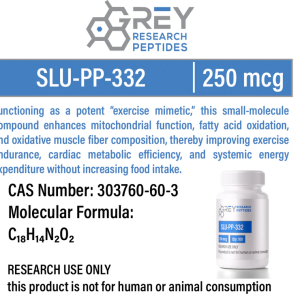
SLU-PP-332 250mcg x 100ct
Summary Description: SLU-PP-332 is a synthetic pan estrogen receptor-related receptor (ERRα/β/γ) agonist optimized for high potency toward ERRα and engineered with favorable pharmacokinetics for in vivo research. Functioning as a potent “exercise mimetic,” this small-molecule compound enhances mitochondrial function, fatty acid oxidation, and oxidative muscle fiber composition, thereby improving exercise endurance, cardiac metabolic efficiency, and systemic energy expenditure without increasing food intake1-4.