


Product Usage:
This PRODUCT IS INTENDED AS A RESEARCH CHEMICAL ONLY.
This designation allows the use of research chemicals strictly for in vitro testing and
laboratory experimentation only. All product information available on this website is for
educational purposes only. Bodily introduction of any kind into humans or animals is
strictly forbidden by law. This product should only be handled by licensed, qualified
professionals. This product is not a drug, food, or cosmetic and may not be misbranded,
misused or mislabeled as a drug, food or cosmetic.


Pinealon 20mg
$70.00
Summary Description: Pinealon is a synthetic tripeptide developed as a neuroprotective and geroprotective agent. It exerts potent antioxidant effects, modulates cellular signaling, and supports cognitive function, cell viability, and adaptation to stress. Pinealon has been extensively studied in animal models for its efficacy in reducing oxidative stress, supporting learning and memory, and modulating key brain neurotransmitter and receptor systems1-4.
Products will arrive in a lyophilized (powder) form for maximum stability
20 in stock
Description
Compound Name: Pinealon
Synonyms: Glu-Asp-Arg tripeptide, Epithalamin Short Peptide
CAS Number: 175175-23-2
Molecular Formula: C15H26N6O8
Molecular Weight: ~418.40 g/mol
Structure: Synthetic tripeptide
Peptide Sequence: H-Glu-Asp-Arg-OH
Chemical Structure:
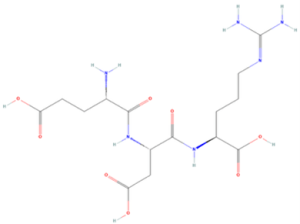
Source: PubChem
Mechanism of Action: Pinealon acts by suppressing the accumulation of reactive oxygen species (ROS) in various cell types, leading to reduced oxidative stress and necrotic cell death. It modulates intracellular signaling pathways such as ERK1/2 and the cell cycle, supports antioxidant enzyme activity, and stabilizes cellular membranes. Pinealon also normalizes neurochemical imbalances in models of metabolic and hypoxic stress, influences NMDA receptor subunit gene expression, and restores normal neurotransmitter rhythms, collectively promoting neuroprotection and metabolic resilience1,2,4.
Biological Activity: Pinealon exhibits pronounced antioxidant, neuroprotective, and geroprotective activities. It restricts ROS accumulation and cell loss under stress, supports cell proliferation, improves cognitive function in aged and diabetic animal models, and restores diurnal rhythms of neurotransmitters in the brain, especially norepinephrine1-4. It also enhances learning and memory by modulating NMDA receptor subunit expression and bolsters the antioxidant defense system2,3.
Storage: Store at –20°C in a dry, dark environment.
Drug Categories: Neuroprotective Peptides, Antioxidants, Cognitive Enhancers, Geroprotectors
Additional Notes: Non-toxic in studied animal models; investigational compound.
Summary Table:
| Property | Description |
| CAS Number | 175175-23-2 |
| Molecular Formula | C15H26N6O8 |
| Molecular Weight (MW) | ~418.4 g/mol |
| Mechanism of Action | Suppresses ROS, stabilizes membranes, modulates ERK and cell cycle; normalizes neurotransmission |
| Biological Activity | Neuroprotection, antioxidant, cognitive enhancement, supports cell viability |
| Supplied Form | Powder, for reconstitution |
| Purity | ≥95% (HPLC) |
| Storage | –20°C; protect from light and moisture |
| Drug Categories | Neuroprotective peptide, antioxidant, geroprotector, cognitive enhancer |
| Additional Notes | Not for clinical use, laboratory research only |
Disclaimer: For Research Use Only. Not intended for human or veterinary use. This compound is supplied solely for laboratory and R&D purposes.
Detailed Product Description
Pinealon is a synthetic tripeptide comprising glutamic acid, aspartic acid, and arginine, designed with structural motifs derived from natural brain peptides. Recognized for its potent neuroprotective and antioxidant properties, Pinealon effectively restricts the accumulation of harmful reactive oxygen species in neural and non-neural cells under conditions of metabolic or hypoxic stress1. Experimental research demonstrates its capacity to reduce cell death, delay activation of stress-related signaling pathways, and promote cell cycle progression, thereby increasing cell viability and supporting regeneration1,4.
Pinealon’s therapeutic profile has been validated in multiple animal models, showing a positive impact on cognitive functions such as learning and memory, even in aged, diabetic, or stressed subjects2,3. By correcting neurochemical imbalances and restoring healthy rhythms of norepinephrine and oxidative stress markers, Pinealon demonstrates wide-ranging benefits in brain health, adaptation to stress, and overall cell resilience3,4. These effects may involve interaction with key receptor systems, including NMDA receptor gene regulation, and enhancement of endogenous antioxidant enzyme activity2.
Research Highlights
- Neuroprotective Effects: Demonstrated to protect neurons from oxidative and excitotoxic damage by suppressing reactive oxygen species (ROS) accumulation, stabilizing cellular membranes, delaying ERK1/2 stress signaling, and preventing necrotic cell death; shown to preserve neuronal viability and function in models of hypoxia, hyperhomocysteinemia, and diabetes1-4.
- Cognitive Enhancement and Learning Support: Improves spatial learning, navigation performance, and memory retention in young, aged, and metabolically impaired animal models; benefits correlate with modulation of NMDA receptor subunit gene expression, normalization of Grin2a/Grin2b ratios, and improved synaptic plasticity2,3.
- Antioxidant and Anti-Stress Adaptation: Potently restricts intracellular and extracellular ROS production, elevates antioxidant enzyme activity (superoxide dismutase, glutathione peroxidase), and mitigates prooxidant stress responses; supports adaptation to acute hypoxic exposure and metabolic challenges by bolstering endogenous defense mechanisms1,3.
- Regulation of Neuroendocrine Rhythms: Restores diurnal dynamics of norepinephrine in the medial preoptic area of the hypothalamus impaired by hyperhomocysteinemia; contributes to normalized gonadotropin-releasing hormone (GnRH) regulation and supports reproductive function in female rats under metabolic stress4.
- Geroprotective Properties: Enhances learning and resilience in aged animal models under cognitive stress, potentially linked to modulation of the caspase‑3 system in brain structures; supports brain metabolic homeostasis and reduces the negative impact of age- related oxidative imbalance3.
Mechanism of Action
Reactive Oxygen Species (ROS) Suppression and Antioxidant Effects
- Reduces intracellular and extracellular ROS accumulation in neurons and neutrophils via dose-dependent mechanisms1.
- Enhances the activity of key antioxidant enzymes (superoxide dismutase, glutathione peroxidase) under stress conditions1.
- Prevents ROS-induced cell death and necrosis, supporting cell viability and neuroprotection1.
ERK1/2 Modulation and Cell Cycle Regulation
- Delays and suppresses ERK1/2 phosphorylation, interfering with oxidative and stress signaling cascades1.
- Promotes redistribution of cells through G1, S, and G2 phases, fostering proliferative activity even under stress1.
NMDA Receptor Subunit Regulation
- Modulates gene expression of NMDA receptor subunits (Grin1, Grin2a, Grin2b, Grin2d) in the hippocampus2.
- Normalizes Grin2a/Grin2b ratio, which is linked to improved cognitive function and learning in diabetic animal models2.
Circadian and Neurotransmitter Regulation
- Restores diurnal dynamics and proper rhythmicity of neurotransmitters (e.g., norepinephrine) in hypothalamic areas involved in reproduction and cognition4.
- Supports neuroendocrine homeostasis under conditions of metabolic and oxidative stress4.
Pharmacokinetic Profile
- Route of Administration: Subcutaneous injection (SC)
- Dosing Frequency: Once daily
- Half-life: 6-8 hours
Formulation & Handling
- Supplied as lyophilized powder or sterile solution for laboratory use
- Typical storage at –20°C, protected from light and moisture
Selected Clinical Trial Activity
Pinealon is a research-grade compound that has been studied in laboratory settings but has not undergone full clinical development. It is not approved for therapeutic use in humans, and no large-scale clinical trials have been conducted to evaluate its safety or efficacy as a medication. Pinealon is supplied strictly for laboratory research and investigational purposes only.
References
1Khavinson, V. et al. Pinealon increases cell viability by suppression of free radical levels and activating proliferative processes. Rejuvenation Res. 14, 535–541 (2011).
2Karantysh, G. V. et al. Effect of Pinealon on learning and expression of NMDA receptor subunit genes in the hippocampus of rats with experimental diabetes. Neurochem. J. 14, 314–320 (2020).
3Mendzheritskii, A. M. et al. Effect of peptide geroprotectors on navigation learning in rats of different ages and caspase-3 systems in their brain structures. Adv. Gerontol. 4, 37–45 (2014).
4Korenevskii, A. V. et al. Pinealon corrects hyperhomocysteinemia-induced disturbances of the diurnal dynamics of hypothalamic norepinephrine content in female rats. Neurochem. J. 8, 205–207 (2014).
Additional information
| Weight | 1 g |
|---|
Shipping & Delivery
Related products

BPC-157/TB-500 10+10mg
Summary Description: BPC-157 and TB-500 is an investigational blend of two well-studied peptides known for their regenerative and cytoprotective properties. BPC-157, derived from a gastric protein, is recognized for promoting angiogenesis, cellular migration, and tissue healing across various organ systems1,2. TB-500, a synthetic fragment of thymosin beta-4, enhances cellular motility, reduces inflammation, and stimulates new blood vessel formation3,4. Together, this synergistic blend is being explored in preclinical research for its ability to accelerate wound healing, mitigate inflammation, and enhance recovery in models of soft tissue injury, nerve damage, and musculoskeletal trauma. While individually effective, the co-administration of BPC-157 and TB-500 may produce more robust regenerative outcomes by targeting both the structural and signaling components of tissue repair.
Products will arrive in a lyophilized (powder) form for maximum stability

BPC-157/TB-500/KPV/GHK-Cu 10+10+10+50mg (KLOW blend 80mg)
Summary Description: The KLOW Peptide Blend is a comprehensive anti-aging and regenerative peptide complex that combines BPC-157, TB-500, GHK-Cu, and KPV to restore cellular vitality, improve tissue resilience, and counteract age-related degeneration. This synergistic formulation targets several hallmarks of aging (chronic inflammation, oxidative stress, vascular decline, and collagen loss) to promote youthful structural integrity and enhanced cellular function1-5.
Products will arrive in a lyophilized (powder) form for maximum stability

DSIP 10mg
Summary Description: Delta Sleep-Inducing Peptide (DSIP) is a naturally occurring peptide known for its ability to support deep, restorative sleep and help balance the body’s stress and hormonal responses. Originally discovered in the 1970s from the blood of sleeping animals, DSIP has since been studied for its potential to promote slow-wave (deep) sleep, calm the nervous system, and support recovery. Studies suggest that DSIP works by helping the brain regulate its natural sleep rhythms and hormone balance, making it a promising peptide for overall rest, resilience, and well-being1-4.
Products will arrive in a lyophilized (powder) form for maximum stability

GHK-Cu 50mg
Summary Description: GHK-Cu (glycyl-L-histidyl-L-lysine copper(II) complex) is a naturally occurring copper-binding tripeptide found in human plasma, saliva, and urine. It has potent tissue remodeling, wound healing, antioxidant, and anti-inflammatory properties. GHK-Cu stimulates collagen and glycosaminoglycan synthesis, modulates inflammation, promotes angiogenesis, and supports tissue regeneration and repair. It has been widely studied for applications in dermatology, regenerative medicine, and aging-related research for its role in tissue rejuvenation and healing1-4.
Products will arrive in a lyophilized (powder) form for maximum stability
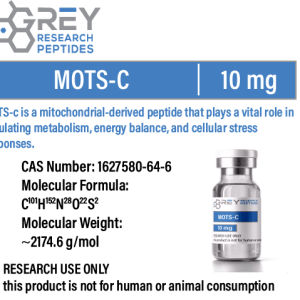
MOTS-C 10mg
Summary Description: MOTS-c (Mitochondrial ORF of the 12S rRNA type c) is a mitochondrial-derived peptide that plays a vital role in regulating metabolism, energy balance, and cellular stress responses. Discovered in 2015, MOTS-c functions as a signaling molecule that helps the body respond to metabolic stress by improving glucose uptake, enhancing insulin sensitivity, and promoting fat metabolism. It acts as a mitochondrial messenger that communicates with the nucleus to maintain cellular homeostasis, making it a promising target for research on metabolic health, exercise performance, and healthy aging1-4.
Products will arrive in a lyophilized (powder) form for maximum stability
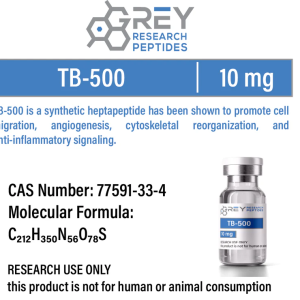
TB-500 10mg
Summary Description: TB-500 is a synthetic heptapeptide analog of the actin-binding motif of thymosin β4 (Tβ4), composed of the acetylated sequence Ac-LKKTETQ. This fragment conserves the principal bioactive domain associated with Tβ4’s regenerative activity. TB-500 has been shown to promote cell migration, angiogenesis, cytoskeletal reorganization, and anti-inflammatory signaling in preclinical models1,2. Due to its shorter sequence, TB-500 offers enhanced metabolic stability and amenability to synthetic optimization compared to the parent protein. While TB-500 is banned in competitive sports, it continues to be studied for its potential in promoting angiogenesis, tissue repair, and modulation of actin-binding proteins.
Products will arrive in a lyophilized (powder) form for maximum stability

Testagen 20mg
Summary Description: Testagen is a synthetic, short peptide bioregulator that targets the regulation and restoration of testicular and endocrine system functions. Developed at the St. Petersburg Institute of Bioregulation and Gerontology, it has been shown in research models to stimulate protein synthesis in testicular cells, modulate gene expression linked to steroidogenesis, influence stem cell differentiation into functional Leydig-lineage cells, and counteract age-related involution of reproductive tissues. By binding to specific DNA sequences and protecting promoter regions from methylation, Testagen helps to maintain transcriptional activity in genes involved in hormone synthesis, with potential implications for sustaining optimal testosterone production under physiological stress or aging conditions1-3.
Products will arrive in a lyophilized (powder) form for maximum stability

Vilon 20mg
Summary Description: Vilon is a short synthetic dipeptide originally developed from thymic peptides, studied extensively for its potent immunomodulatory, regenerative, anti-inflammatory, and geroprotective properties. It supports cellular repair, enhances digestive and barrier functions of the small intestine, modulates immune cell activity, and improves chromatin structure in aging cells, making it a promising research compound in aging biology and tissue regeneration1-6.