
People usually search for this


Peptides for Skin: Beyond GHK-Cu – A Research Overview

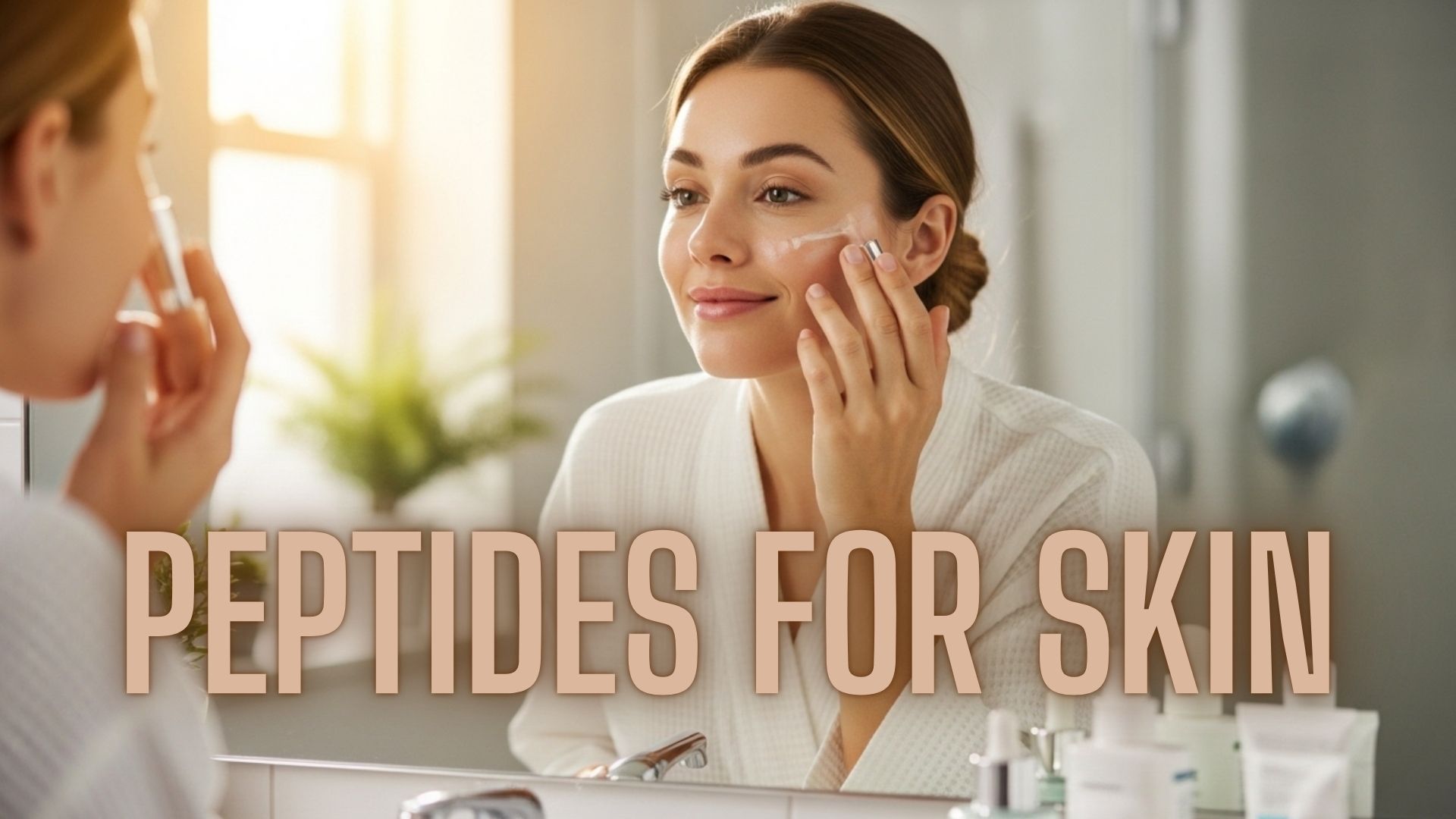
The skin is not merely a mechanical barrier. The dermis and epidermis express a high density of peptide receptors, and the accessibility of the skin as an organ makes it an attractive target for studying both topical and systemic delivery routes for peptide compounds. This is precisely why peptides for skin have emerged as one of the most active areas of peptide science – with an evidence base that, in several areas, is ahead of other research categories.
The answer to the question of what peptides do for skin at the mechanistic level:
- They signal fibroblasts about changes in activity
- They regulate collagen and elastin synthesis,
- They modulate melanin production
- They influence the inflammatory environment of the dermis
These are documented receptor interactions with measurable downstream effects. Our article covers both topical and injectable research areas.
GHK-Cu is the most studied peptide in a dermatological context and takes center stage in this material, but the research landscape is much broader. This is an informational literature review, not a clinical recommendation.
What Peptides Actually Do in Skin Tissue – The Mechanisms Behind the Research
Before moving on to specific compounds, it is necessary to understand the mechanistic basis. What peptides do for skin at the cellular biology level involves three fundamentally different types of action:
- First: signaling peptides. They bind to fibroblast receptors and trigger the synthesis of structural components of the extracellular matrix: collagen, elastin, and hyaluronic acid. The mechanism is analogous to endogenous signaling – the peptide mimics or amplifies the natural stimulus for synthesis.
- Second: carrier peptides. Their task is not direct receptor activation, but the delivery of trace elements to the enzymatic systems involved in tissue remodeling. GHK-Cu works according to this logic: the copper complex serves as a cofactor for lysyl oxidase, an enzyme critical for cross-linking collagen and elastin fibers.
- Third: neurotransmitter-inhibiting peptides. They reduce acetylcholine release at neuromuscular synapses, thereby weakening facial muscle contractions. Argireline (acetyl hexapeptide-3) is the most extensively studied member of this group.
Research in this field measures objective metrics: collagen density, dermal thickness via ultrasound, wrinkle depth via profilometry, and wound re-epithelialization rate – these are the endpoints that allow us to discuss the best peptides for skin based on data, not marketing claims.
GHK-Cu – Why It Dominates Skin Peptide Research
GHK-Cu (glycyl-L-histidyl-L-lysine copper complex) is an endogenous tripeptide whose plasma concentration decreases with age: from approximately 200 ng/mL in youth to significantly lower levels after age 60.
This age-related decline correlates with a deterioration in wound-healing capacity, which is what sparked the initial scientific interest in the compound.
GHK Cu is studied through several mechanistic pathways. It stimulates fibroblast proliferation and collagen and glycosaminoglycan synthesis. It modulates the activity of matrix metalloproteinases – simultaneously activating reconstructive MMPs and suppressing excessive proteolysis – which is important for maintaining the balance between the degradation of the old matrix and the synthesis of the new one. It demonstrates anti-inflammatory effects in dermal tissue models through reduced NF-?B activation. Pickart and Margolina (2018, Biomolecules) synthesized data on the effects of GHK-Cu on the expression of over 4,000 genes – including those associated with repair, antioxidant defense, and anti-inflammation.
The evidence base for GHK-Cu encompasses data from cell cultures, animal models, and human clinical trials – such comprehensiveness is atypical for most skin peptides and is the primary reason for its status as a research benchmark in this category.
GHK-Cu Before and After – What Clinical Measurements Show
GHK-Cu before and after, in a strictly scientific sense, is a comparison of objectively measured dermal parameters at the start and end of the study. Clinical studies on topical formulations have documented statistically significant changes in several markers:
- Increased skin density and thickness as measured by ultrasound densitometry
- Reduction in the depth of fine lines and wrinkles as measured by profilometry
- Improvement in skin elasticity
- Acceleration of wound surface re-epithelialization in wound healing trials.
The second context of GHK-Cu before and after is systemic injection. Here, research extends beyond the dermis: it examines modulation of the IGF-1 pathway and broader effects on connective tissue repair. The evidence base for the injectable route is less developed than for the topical route – and this difference is important to consider when interpreting any efficacy data.
A caveat regarding study quality: some of the research on GHK Cu was industry-funded and conducted on small sample sizes. The most reliable results come from independent trials using objective measurement tools and adequate control groups.
Beyond GHK-Cu – Other Skin Peptides Active in the Research Literature

From a research perspective, the answer to the question of what the best peptides for skin are is not limited to a single compound. Four other peptides have a significant presence in the peer-reviewed literature:
- Matrix (palmitoyl pentapeptide-4). This is the most studied cosmetic signaling peptide. Mechanism: mimics a collagen fragment, binds to fibroblast receptors, and triggers the synthesis of collagen types I and III, as well as fibronectin. Clinical trials have documented reductions in wrinkle depth and improvements in skin turgor; the evidence base includes independent studies using objective measurement tools.
- Argireline (acetyl hexapeptide-3). It inhibits neurotransmitter release at the neuromuscular junction, thereby reducing the amplitude of facial contractions. Clinical data on the reduction in the depth of expression lines have been replicated in several independent trials.
- Leuphasyl. It is most often studied in combination with argireline as a synergistic neuromuscular inhibitor. The standalone evidence base is limited; of interest is the potentiation of the effect when used together.
- Snap-8. This is an octapeptide that extends the structure of argireline. Studies have investigated whether comparable neuromuscular relaxation can be achieved at lower concentrations. The data are preliminary but biologically plausible.
In a research context, the best peptides for skin are those with the highest density of independently verified data on objective dermal markers. By this criterion, GHK-Cu and Matrixyl hold the strongest position; argireline, in terms of the neuromuscular mechanism.
GHK-Cu Side Effects – What Research and Clinical Use Report
GHK-Cu side effects from topical application are fairly well characterized: the tolerability profile observed in clinical trials is generally favorable. Contact dermatitis and hypersensitivity reactions were observed in a small proportion of subjects – these were generally attributed to the copper component or the formulation’s excipients, rather than the peptide itself. Temporary bluish-green skin discoloration may occur with the use of highly concentrated topical formulations – this is a direct consequence of the copper complex and is cosmetic rather than toxicological.
For injectable use, the systemic adverse-effect profile is less well characterized: long-term safety data on the parenteral administration of GHK-Cu in humans are limited. An important distinction: the absence of significant adverse events in topical trials reflects, in part, the limited systemic absorption of topically applied peptides – and cannot serve as a basis for concluding that the injectable route is safe.
What Skin Peptide Research Still Needs to Establish
The research landscape for peptides for skin is broader and, in some areas, better documented than for other peptide categories. GHK-Cu and several cosmetic peptides have robust clinical data with objective endpoints. This is a key distinction from most research compounds, which are primarily at the preclinical stage.
What the field still lacks: large-scale, long-term randomized controlled trials with standardized outcome measures for most compounds; direct comparisons across different peptide classes; and validated dosing protocols for injectable dermatological applications. A separate issue: the cosmetics industry moves faster than peer-reviewed science. Many compounds are widely marketed long before independent clinical data becomes available.
The most reliable way to evaluate the best peptides for skin, based on actual evidence, is to look for independent, peer-reviewed studies that use objective skin measurement tools and adequate control groups, rather than industry-provided before-and-after data. Peptides for skin care as a field deserves serious research attention – and, at the same time, requires equally serious critical analysis of sources.
This article is for informational purposes only. Any decisions regarding the use of peptides in a dermatological context should be made in consultation with a qualified specialist.
Grey Research Peptides offers GHK-Cu for researchers studying dermal repair, collagen synthesis, and extracellular matrix remodeling. The compound is available in high-purity form, intended strictly for in vitro and laboratory use by licensed professionals. Explore our catalog to find compounds relevant to your skin research protocols.
Frequently Asked Questions
What peptides are studied for skin research beyond GHK-Cu?
Beyond GHK-Cu, frequently studied skin peptides include Matrixyl and palmitoyl pentapeptides (collagen synthesis research), Argireline/acetyl hexapeptide (SNAP-25 inhibition models), BPC-157 (angiogenesis and repair models), Thymosin Beta-4/TB-500 (cell migration and wound healing), and various copper peptide derivatives. Each addresses a different facet of skin biology and uses different experimental models.
What makes GHK-Cu central to skin peptide research?
GHK-Cu (glycyl-histidyl-lysine bound to copper) has been characterized in research for over four decades. Studies have examined its modulation of more than 4,000 genes related to ECM remodeling, anti-inflammatory pathways, and antioxidant defense, making it one of the most extensively profiled skin peptides in preclinical literature and a reference point for newer compounds.
How do researchers distinguish signaling peptides from carrier peptides?
Signaling peptides like Matrixyl are studied for direct effects on cell-surface receptors and downstream gene expression, particularly collagen synthesis pathways. Carrier peptides like GHK-Cu deliver bioavailable trace elements — copper in this case — that act as cofactors in enzymatic skin processes. Research protocols differ significantly between these two classes.
What delivery methods are used in skin peptide research?
Common preclinical formats include topical formulations (creams, serums, hydrogels) for stratum corneum penetration studies, intradermal injection in wound healing models, and ex vivo skin explant cultures for mechanism studies. Each method addresses different research questions about peptide stability, tissue penetration, and cellular distribution within skin layers.