
People usually search for this


Getting Peptide Reconstitution Right Starts With One Critical Choice – Your Reconstitution Water

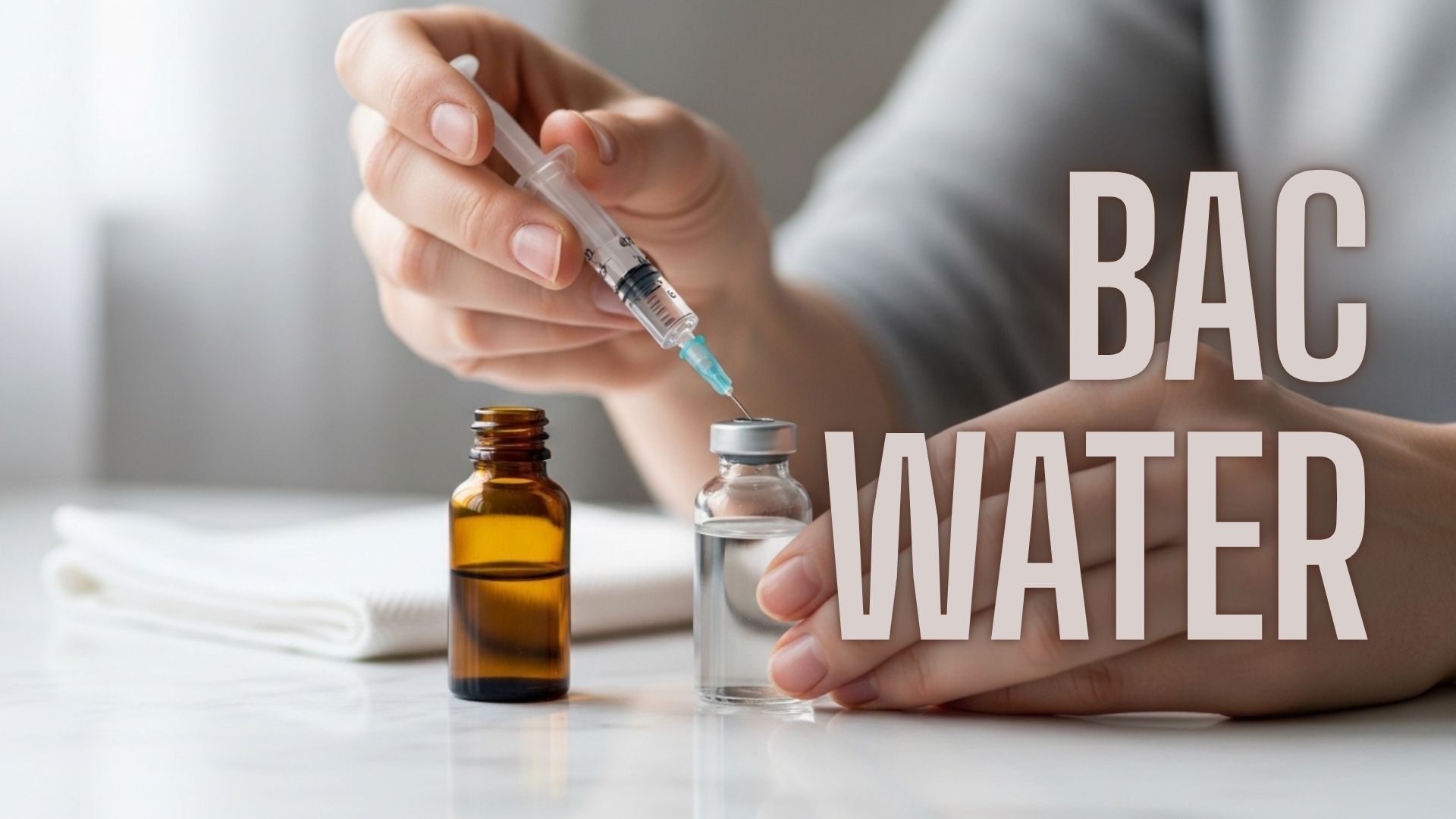
Researchers working with peptides pay close attention to the purity of the compound, the storage conditions of the lyophilized powder, and the accuracy of dosing. However, one factor is often overlooked: the choice of solvent for reconstitution. Yet it is the solvent that determines the sterility of the solution, the stability of the molecule, and the suitability of the final product for use over several days or weeks.
Bacteriostatic water has become the standard in research practice for a reason. Peptide reconstitution is not simply dissolving powder in water: it is the creation of a biologically active solution that will be used multiple times from a single vial, stored under specific conditions, and maintain the compound’s activity throughout the entire protocol.
BAC water is a common abbreviation for bacteriostatic water in the research community. And now you’ll find answers to the most practically relevant questions: what this solution is, how it differs from alternatives, and how to dilute and store the prepared solution properly.
What Is Bacteriostatic Water – and How Is It Different From Other Injectable Solutions?
The question of what bacteriostatic water is arises for everyone who encounters the topic of peptide dilution for the first time. It is sterile water for injection containing 0.9% benzyl alcohol as a preservative. It is the benzyl alcohol that inhibits the growth of most common bacteria, allowing the solution to be drawn from a single vial multiple times without compromising sterility (provided aseptic technique is followed).
Comparing it with alternatives helps to understand what BAC water is in practical terms:
- Standard sterile water for injection is for single use only: once the vial is opened, it is not protected from contamination.
- Saline solution contains sodium chloride, which can interact with certain peptide formulations, compromising their stability.
- Preservative-free water for injection degrades rapidly with repeated withdrawals from the vial.
A key distinction to understand: bacteriostatic water for injection is manufactured and labeled specifically for injectable use. This means it meets standards for sterility and endotoxin control that neither laboratory-grade distilled water, nor tap water, nor any “general-purpose” solvents can meet. Using an inappropriate solvent is not merely an academic error. It can render the peptide ineffective or even unsafe before administration.
The second aspect of what bacteriostatic water is is its preservative mechanism. Benzyl alcohol does not sterilize the solution in the strict sense of the word: it does not destroy all microorganisms. It inhibits their growth, hence the term “bacteriostatic” as opposed to “bactericidal.” This is important: the preservative effect works in conjunction with proper aseptic technique, not in place of it.
Why BAC Water Is the Preferred Choice for Peptide Reconstitution
Three specific advantages explain why BAC water for peptides has become the research standard:
- First – safety during repeated sampling
A BAC water vial can be repeatedly punctured with a sterile needle without significant risk of contamination. This is critically important when a reconstituted peptide is used over several days or weeks: each withdrawal from a vial of standard sterile water would pose a cumulative risk with each use.
- Second – extended peptide stability
Benzyl alcohol creates a chemical environment that slows molecular degradation during storage. Diluted peptides are sensitive to temperature fluctuations, oxidation, and hydrolysis. BAC water reduces one of these variables, providing a more stable storage environment than water alone.
- Third – compatibility
Most research peptides are designed to be diluted specifically in BAC water for peptides: the pH and osmolarity of the solution generally align well with the conditions under which these molecules maintain their structural integrity.
Note: Several peptides are sensitive to benzyl alcohol and require preservative-free sterile water. This is an exception to the rule rather than a common occurrence – but when working with an unfamiliar compound, you should always consult specific recommendations for its reconstitution.
How to Reconstitute a Peptide With BAC Water – A Step-by-Step Overview
Proper reconstitution begins before the needle touches the vial. The preparatory stage involves gathering the necessary materials:
- Vial containing the lyophilized peptide
- Vial containing BAC water
- Insulin syringe
- Alcohol wipes
The work surface must be as clean as possible; both vials are wiped with an alcohol swab and allowed to dry completely before any contact with the needle.
The next step is the dilution process itself. BAC water is drawn into the syringe slowly, avoiding any sudden movements of the plunger. The needle is inserted into the vial containing the peptide, and the solution is injected along the wall of the glass, not directly onto the lyophilized powder. A direct stream onto the powder creates mechanical stress capable of causing aggregation or partial denaturation of the molecule, as well as foaming. After injecting the entire volume, gently roll the vial between your palms – do not shake it. The final solution should be clear; cloudiness or visible particles indicate a possible problem with dissolution or molecular integrity.
The most technically significant aspect of dilution is calculating the concentration. The volume of BAC water added to the peptide directly determines the final solution concentration and, accordingly, the volume required for each dose. Example: adding 1 mL of BAC water to a vial containing 5 mg of peptide yields a concentration of 5 mg/mL, meaning that every 0.1 mL contains 0.5 mg. Adding 2 mL to the same vial yields 2.5 mg/mL – doubling the volume while maintaining the same dose.
This is precisely where the peptide reconstitution calculator becomes indispensable. The online dilution calculator allows you to enter the amount of peptide in the vial, the desired dose, and the volume of solvent, and it calculates the exact volume to draw up in an insulin syringe. For researchers working with multiple compounds of varying concentrations simultaneously, manual calculation creates a real risk of error, which the calculator eliminates.
Getting the Concentration Right – Why the Reconstitution Ratio Matters More Than Most Realize
The volume of solvent is not an arbitrary choice. Too small a volume results in a highly concentrated solution, where a drawing error of a fraction of a milliliter creates a significant dosing error. Too large a volume requires drawing inconveniently large amounts for each dose, which also increases the likelihood of error.
Practical guideline: a 10 mg vial diluted in 2 mL of BAC water yields 5 mg/mL – or 500 ?g per 0.1 mL (10 units of an insulin syringe). This is a convenient working range for most research protocols. Before using any new diluted vial for the first time, it is recommended to double-check the calculation.
How Long Does BAC Water Last – and Does It Need to Be Refrigerated?

Two practical questions that come up regularly.
How long does BAC water last? For unopened vials, the manufacturer typically specifies a shelf life of 2-3 years. Once opened – that is, after the first needle puncture – most recommendations specify a 28-day usage period. Repeated punctures gradually compromise the integrity of the vial’s rubber membrane, and even with benzyl alcohol present, this mechanical factor limits the vial’s safe shelf life.
Does BAC water need to be refrigerated? On its own, no. An unopened vial of BAC water is stored at room temperature, away from direct light and heat sources. However, once diluted in bacteriostatic water, the solution must be stored at 2-8°C. It is the diluted peptide, not the original solvent solution, that is the heat-sensitive component: at room temperature, molecular degradation accelerates significantly. Freezing diluted peptide solutions is generally undesirable; cryocrystallization (ice crystal formation) can disrupt the molecular structure unless otherwise specified in a storage protocol.
Common BAC Water Storage Mistakes That Compromise Peptide Quality
Storage errors are generally not catastrophic, but they cumulatively degrade the quality of the research material.
The most common: storing a diluted peptide solution at room temperature, assuming the preservative effect of bacteriostatic water is sufficient to maintain stability. Benzyl alcohol inhibits bacterial growth; it does not slow the chemical degradation of the peptide, which occurs much faster at room temperature than at 4°C.
The second mistake is using the same needle for repeated withdrawals from the vial. The needle becomes contaminated upon first contact with the external environment; each subsequent insertion into the vial creates a risk that benzyl alcohol may not compensate for if aseptic technique is consistently compromised.
The third is exposure to light. Ultraviolet radiation accelerates the degradation of peptide molecules regardless of storage temperature. Vials containing diluted peptides should be stored in opaque containers or in locations protected from direct light.
The fourth is the absence of a label indicating the dilution date. Without it, it is impossible to reliably determine whether a vial of BAC water for peptides is within the safe usage window. Dating the vial upon dilution is a basic practice that eliminates this source of uncertainty.
Where to Source Bacteriostatic Water – and What to Look For on the Label
Bacteriostatic water for injection must be purchased from reputable pharmaceutical suppliers or licensed pharmacies. General-purpose laboratory chemical suppliers may not meet the sterility and endotoxin control requirements established for injection-grade solutions.
Proper vial labeling includes: “Water for Injection USP,” 0.9% benzyl alcohol as a preservative, the lot number, the expiration date, and the manufacturer’s information. The absence of any of these elements is grounds for not using the product for injection applications. Vials without factory seals or showing signs of compromised packaging integrity are excluded without exception.
The standard format for research applications is a 30 mL vial: a sufficient volume for multiple uses, while allowing for a 28-day shelf life after opening without significant residue.
Properly selected bacteriostatic water is the foundation of a reproducible, safe, and properly documented research protocol. Negligence in selecting a solvent undermines the investment in the peptide’s quality. BAC water is not chosen by default; it is chosen because it simultaneously solves real problems in sterility, stability, and dosing accuracy.Grey Research Peptides supplies BAC (bacteriostatic) water in 30 ml vials – the standard format for peptide reconstitution in research protocols. Available alongside our full catalog of high-purity research peptides for licensed professionals conducting in vitro and laboratory work. Explore our catalog to source everything your protocol requires.
Frequently Asked Questions
What's the difference between bacteriostatic water and sterile water?
Bacteriostatic water contains 0.9% benzyl alcohol as a preservative, allowing multi-use vials to remain microbially safe for up to 28 days after opening. Sterile water has no preservative and is single-use. Bacteriostatic water is preferred when a research peptide will be dosed across multiple research sessions; sterile water is preferred for single-use or when benzyl alcohol could interfere with experimental endpoints.
When should sterile water be used instead of bacteriostatic water?
Sterile water is appropriate when the entire vial will be used in a single session, when the peptide is incompatible with benzyl alcohol (rare), or when the research design specifically excludes preservatives — for example, certain cell culture studies where benzyl alcohol could affect cell viability or experimental outcomes.
Why does pH and buffer choice matter for peptide reconstitution?
Peptide solubility and stability are pH-dependent — peptides with isoelectric points near neutral pH may precipitate when reconstituted in unbuffered water, while peptides with charged residues may need specific pH conditions for full dissolution. Researchers consult product data sheets and published literature for peptide-specific buffer recommendations before reconstitution.
How long do reconstituted peptides remain stable?
Stability after reconstitution varies by peptide but typically ranges from 7 to 30 days under refrigeration at 2–8°C. Factors affecting stability include the peptide's primary sequence, presence of oxidation-sensitive residues (Met, Cys, Trp), pH, presence of preservatives, and the number of freeze-thaw cycles experienced.
What handling errors most commonly degrade reconstituted peptides?
Common errors include vigorous shaking (causes aggregation and denaturation — gentle swirling is preferred), repeated freeze-thaw cycles (causes physical degradation — aliquoting before freezing avoids this), exposure to light and air (causes oxidation — amber vials and proper sealing help), and prolonged room temperature exposure during dosing or aliquoting sessions.